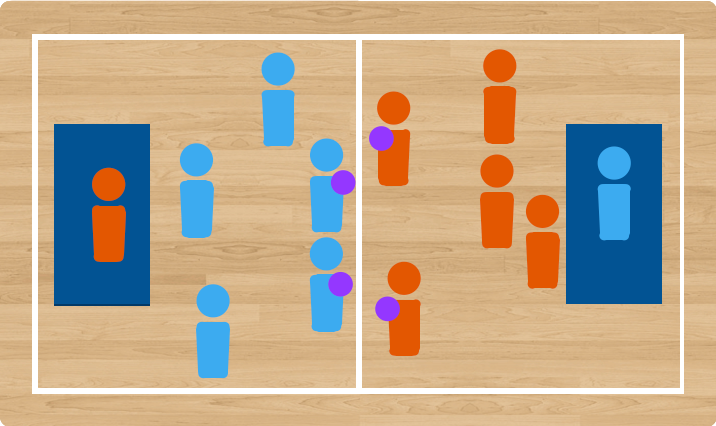
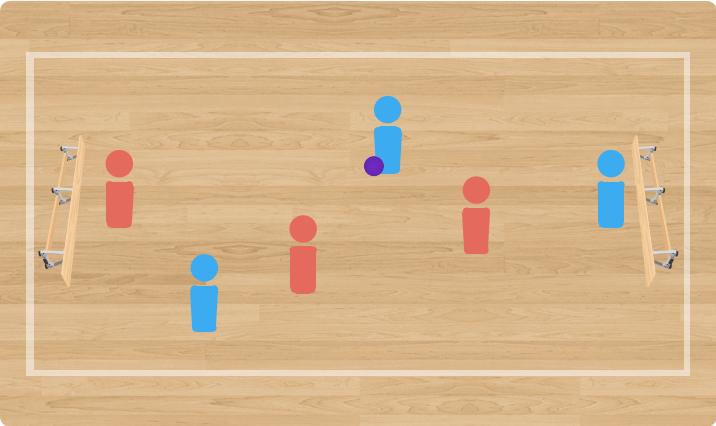
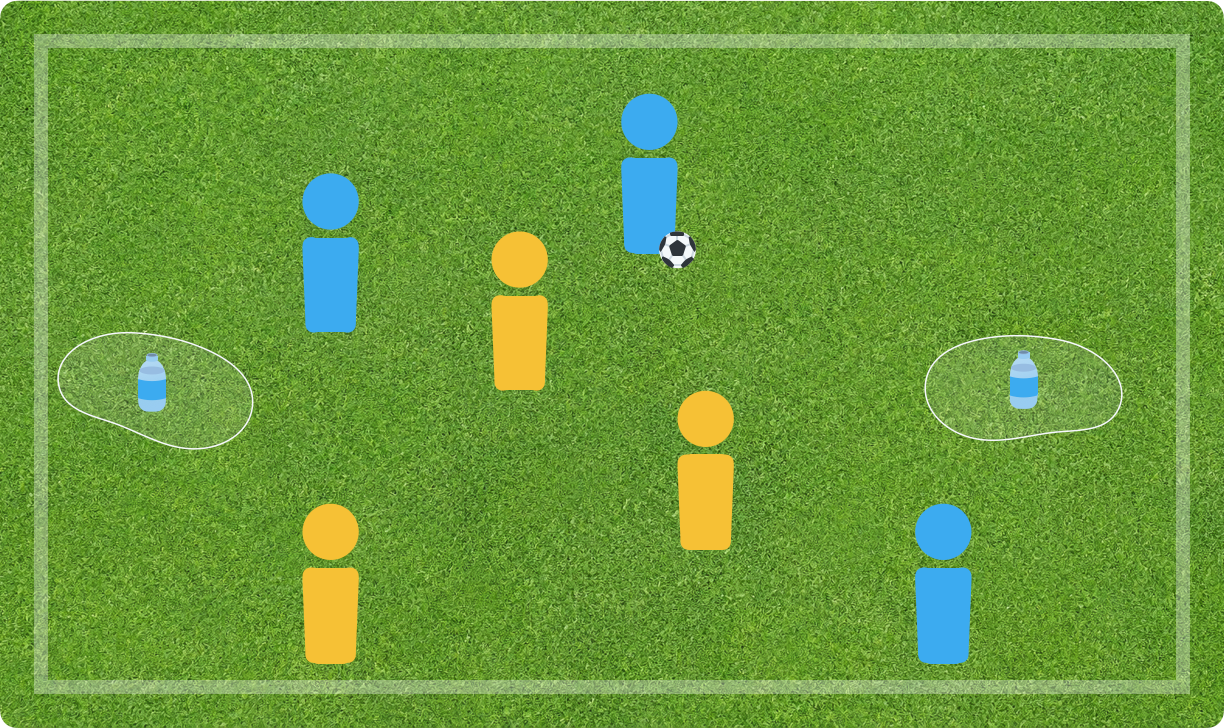
Matball is an invasion game in which teams race to move every player onto their mat by completing passes to their catchers. Students learn the cues for receiving a pass and what to do to make themselves an option for a teammate with the ball.
Make sure you are using mats that are large enough to accommodate each team.
Catchers have to land with both feet on their mat when completing a pass.
Defensive players may not land on their opponent’s mat at any time.
Hand this to a sub and walk away. Printable pages for every build, diagrams, discussion questions, teacher notes, and assessment ideas. All in one ready-to-print package so there's no sub plan to write.
#PhysEdU Plus includes instant access to every printable game sheet in ThePhysicalEducator.com's games database. $49 a year.
Builds allow you to increase the game's complexity, one layer at a time.
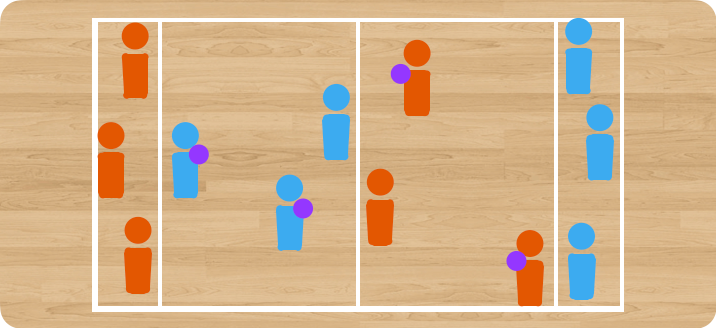
Divide the playing area into two halves and add an end zone to the back of each half. Divide the class into two teams. Each team is given a half of the playing area (their passing zone) and must send half of their team into their end zone, which is at the back of their opponent's half.
The teacher adds balls to the game. Players may pick up a ball and attempt to pass it to one of their teammates in their end zone. The passing player may move up to the half line but may not cross it.
If a player completes a pass from their passing zone to a teammate in their end zone, the passing player and receiving player switch roles. Teams may not interfere with their opponents' passes and simply try to see how many times they can switch roles within the allocated time.
This cooperative build allows students to focus on the passing and catching mechanics without defensive pressure. Encourage catchers to call for the ball and move to open spaces within their end zone.
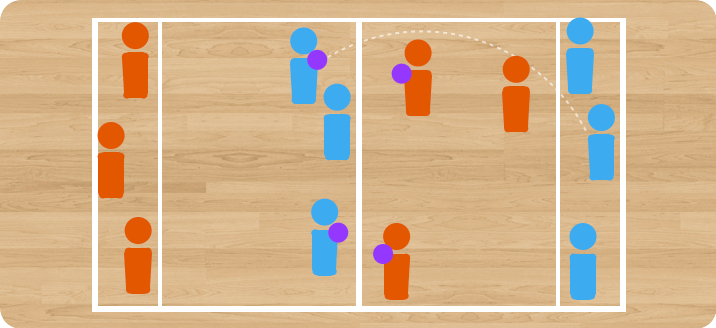
In build two, the teacher increases the tactical complexity by allowing defensive pressure. Players may attempt to interfere with their opponents' passes by guarding players in their opponents' end zone, without stepping into the end zone itself, or by attempting to deny the pass by blocking it at the half line.
Remind defenders that they cannot enter the end zone. This constraint helps create space for catchers while still introducing the challenge of reading defensive positioning.
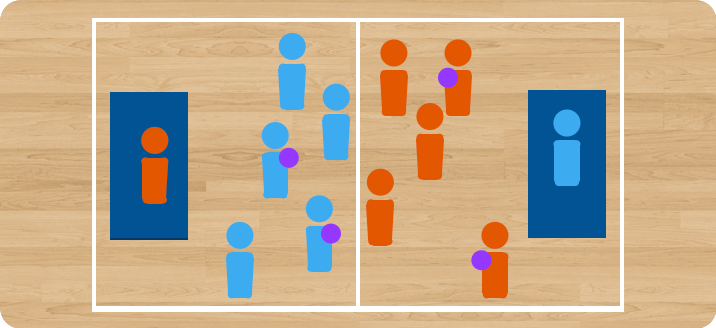
In build three, teams play the full version of Matball. There are no end zones. Instead, each team has a mat at the back of their opponents' half of the playing area.
To start a round, each team selects one player who will go stand on their mat. This player is the first catcher.
Players attempt to complete passes to their catcher from within their passing zone. The defending team may intercept passes or deny them at the half line.
If a passing player successfully completes a pass with their catcher, the passing player joins the catcher on the mat and becomes a catcher as well.
The first team to get all of their players onto their mat wins.
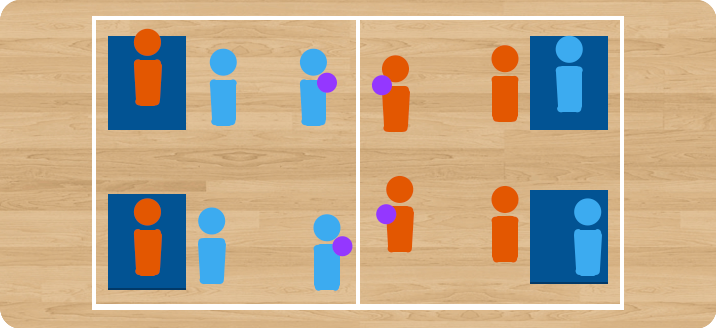
In this build, increase the tactical complexity by placing two mats in the back of each team's opponent's half instead of just one. At the beginning of the round, each team sends two catchers over, one for each mat.
This build increases the tactical complexity by having offensive players decide which mat to send their pass to, and by having defensive players make decisions on which mat to guard and why.
Print the game sheet, leave it on your desk, and your sub has everything they need: the diagrams, the builds in order, what to say, and what to watch for. This one is $4. #PhysEdU Plus members get all 39, free forever, for $49 a year.
Games that build on the same tactics.