


As you probably know, I'm pretty passionate about this whole "teaching PE" stuff.
I can't imagine another career infusing me with such a sense of purpose and vocation. I genuinely get so excited before teaching a new unit that I've worked on, introducing some crazy activity, and seeing my students grow their competence and confidence right before my eyes.
Teaching physical education fills my bucket, and I'm grateful that I've found a career that does so in such a meaningful way.
That said, it ain't all sunshine and lollipops every day. Some days are (much) harder than others, and there are definitely days when I get home and just want to fade into the couch.
Usually (and I'm sure you can attest to this) the culprit of those draining days are challenging student behaviours. The crying, the whining, the tattle telling, the talking back, the ignoring, and even the occasional flipping of the metaphorical bird... all of these things really put a damper on that fire in my belly.
Listen, I know I'm not alone in this. There's actually a pretty solid body of research on the relationship between student behaviour and teacher well-being, and none of it should come as a surprise to any PE teacher who has taught a Friday afternoon class in the last week of June.
A team of researchers pulled together 21 studies on the topic and found a moderate relationship between challenging student behaviours and all three dimensions of teacher burnout (i.e. emotional exhaustion, depersonalization, and reduced personal accomplishment), but the strongest link by a good margin was with emotional exhaustion. I'm talking about that bone-deep sense of having absolutely nothing left in the tank. It makes sense, right? A rough day with a tough class doesn't usually make you stop caring about kids... it just kind of empties you out.
Here's the part I found most interesting, though. A longitudinal study that followed 222 teachers along with over 4,000 of their students found that the thing predicting teacher exhaustion wasn't really the amount of misbehaviour the students said was happening in the room, it was the amount the teacher perceived, and, more importantly, the way that perception chipped away at the teacher's sense of relationship with those kids. The behaviour itself is draining, sure, but what seems to do the real damage is when that behaviour starts to feel like it's wedging itself between you and the students you're trying to build something with.
Then there's the loop of doom: teachers who are experiencing burnout have been found to be less effective at putting routines and proactive strategies in place, and more likely to respond to challenging behaviour with punitive, controlling approaches. So the behaviour drains you, and being drained makes you less equipped to handle the behaviour, and around and around we go until suddenly you don't like how teaching feels anymore (been there, done that).
And here's the thing: this isn't a problem that's going to solve itself. Considering that a survey of nearly 5,000 Canadian educators found 77 percent reporting that student needs have become significantly more complex compared to five years ago, I think it's safe to say that challenging student behaviours aren't going anywhere.
So, what do we do? Well, researchers suggest that one protective factor that teachers can equip themselves with is a higher sense of self-efficacy when it comes to classroom management.
For me, this looks like going into the school year with an active plan for how challenging behaviours are systematically addressed in my class, so that I know I know how to respond when they arise in a way that is effective and protects my sanity.
That's why I spent some time this summer thinking about the challenging behaviours I experienced last year and coming up with a plan on how they get addressed in my teaching.
Let's dive in.
Regulation vs Responsibility
Not all challenging behaviours fall into the same bucket, so they shouldn't all be addressed by the same system. However, if we don't know how to recognize where a behaviour is coming from, then it is hard to know how to deal with it.
So let's break this down.
Regulation-Driven Behaviours
There are times when a student's behaviour is out of their control. Their internal emotional state is a mess, and that is leading to them acting out of control. This can look like:
- Crying, or the flat quiet that comes just before it
- A huge reaction to a small thing
- Shutting down, hiding, going stiff or floppy
- Storming off, or freezing in place
- A voice getting louder that they cannot pull back down
- Anything that arrives with no warning and surprises them too
In these situations, the students are not really in a position to be able to make good choices. Their internal decision-making systems are out of whack, which is another way of saying they have become dysregulated. Nothing you try to say or do while they are in that state is going to have much of an impact until they've given their waters a chance to settle.
Responsibility-Driven Behaviours
Then there are times when a student is actively making poor choices. I say actively because the skill they should have applied in any given situation requiring responsibility was there for them to use... it's just that they didn't use it. This can look like:
- Talking over instructions after a reminder
- Taking equipment that belongs to someone else's game
- Opting out of the activity to bother someone in it
- Ignoring a routine the whole class knows and has practiced
- Unkind words that had a target
- The third go at something you have already redirected twice
In these situations, the student was able to make a good choice but decided not to. A wrong was made that needs to be righted, and the student needs to know that in order to learn how to be a positive member of the group.
The Muddy Middle
Here's the thing, though: in reality, most challenging behaviours are both. A kid gets overwhelmed, and then makes a lousy choice from inside that overwhelmed state. The two buckets aren't nearly as tidy as I've just made them out to be.
That's ok, because the buckets aren't really there to sort behaviours. They're there to sort what you do next, and in what order.
Settle first, sort second. You get the kiddo's body back before you ask them to think about anything, because a flooded brain can't do restorative thinking no matter how good your questions are. Then, once they're actually back in their body, you deal with any wrong that needs righting.
And when you genuinely can't tell which one you're looking at (which will happen, because you're making this call in about a second and a half while twenty-two other kids are moving), choose regulation. You can always move a settled kid along to responsibility, but you can't undo shaming a kid who was drowning.
Two Systems For Managing Challenging Student Behaviour
Since there are two different buckets in which we can sort challenging student behaviours, it makes sense that two different systems deal with them.
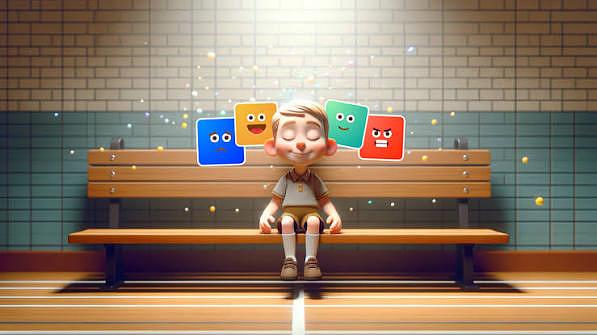
Regulation-Driven Behaviours: The Breather Bench
I've written about my Breather Bench system before, but here is a brief snapshot of how it works.
The Breather Bench is a dedicated bench in my gym where students can go to self-regulate. Sometimes they take themselves there, and sometimes I'll ask a kid to go take a breather, but the framing never changes: the Breather Bench is a tool, never a consequence. Even when I'm the one suggesting it, I'm handing a student something that helps them get back to feeling good, not doling out a punishment.
The bench works over four steps, each with its own set of visuals stuck to the bench itself:
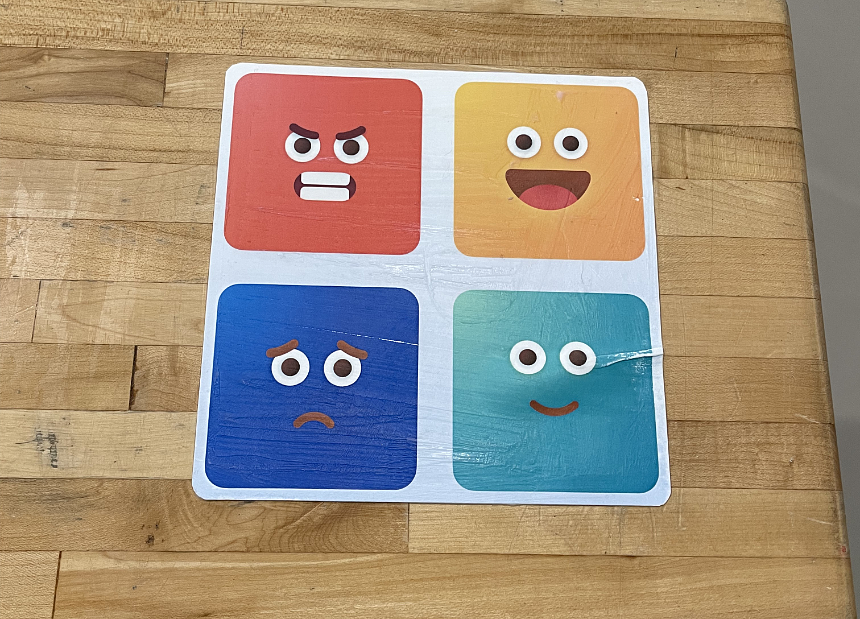
⏳ Step One: Take A Breather. Students arrive to a graphic featuring four emotional zones and a two-minute sand timer that lives in a cup screwed to the underside of the bench. The goal here is to create some space between how you're feeling and how that feeling is making you think, act, and behave. I've found the physical timer gives kids something to focus on while that space opens up.
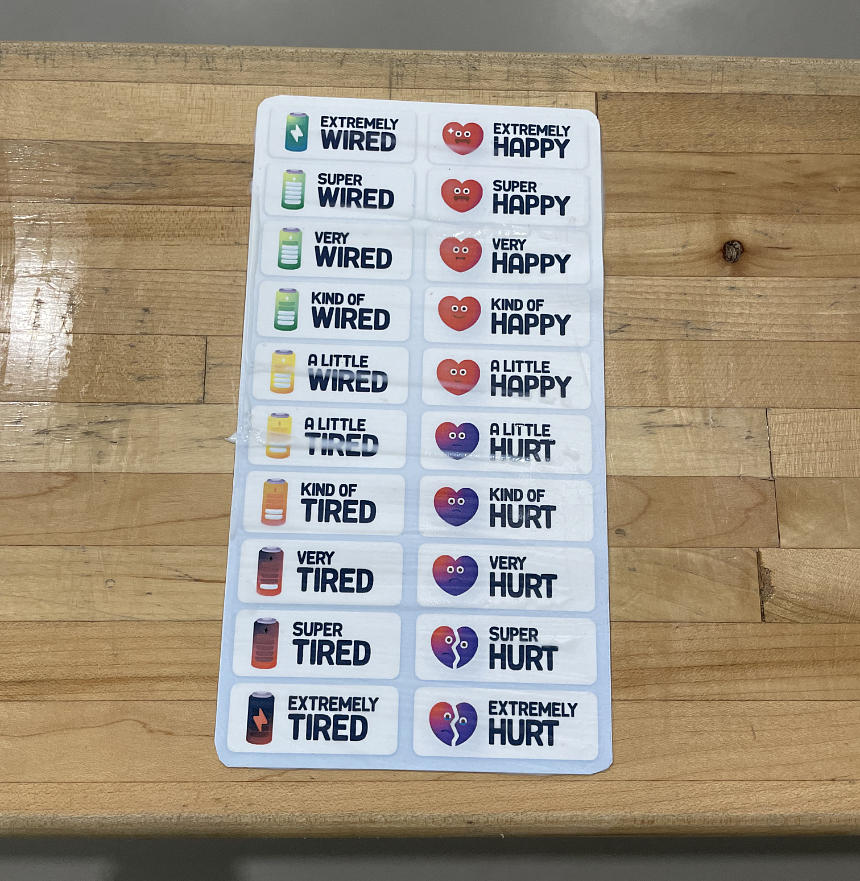
⚡️ Step Two: Paint A Physical Portrait. Next, students figure out how the emotion is living in their body by rating two sensations from 1 to 10: pleasantness (is your body feeling happy or hurt?) and energy (is your body feeling wired or tired?). They mark their ratings with glass beads that are also stored under the bench.
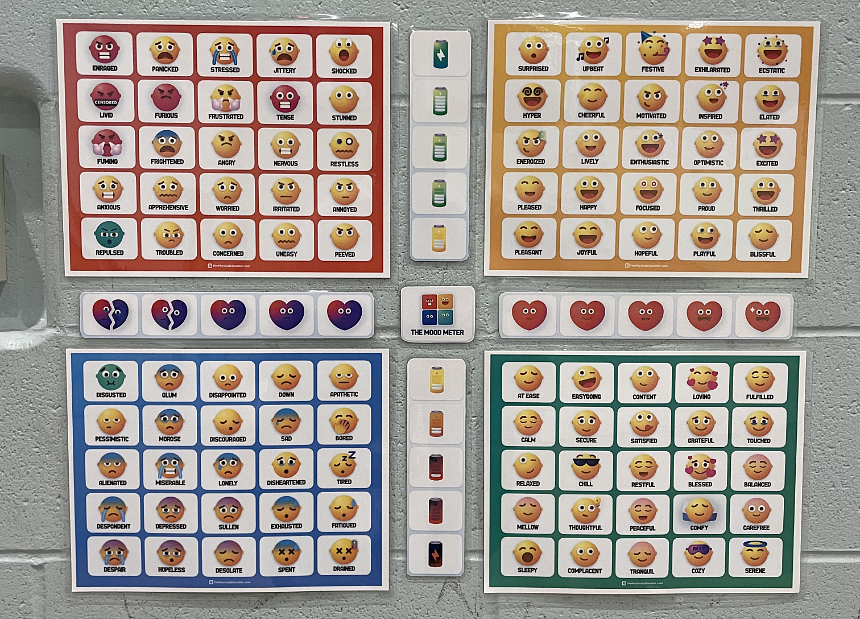
🔢 Step Three: The Mood Meter. Using those two ratings as coordinates, students plot their emotion on the Mood Meter chart hanging on the wall above the bench. If the emotion they land on resonates, they've labelled it. If it doesn't, they check its neighbours until they find one that does.
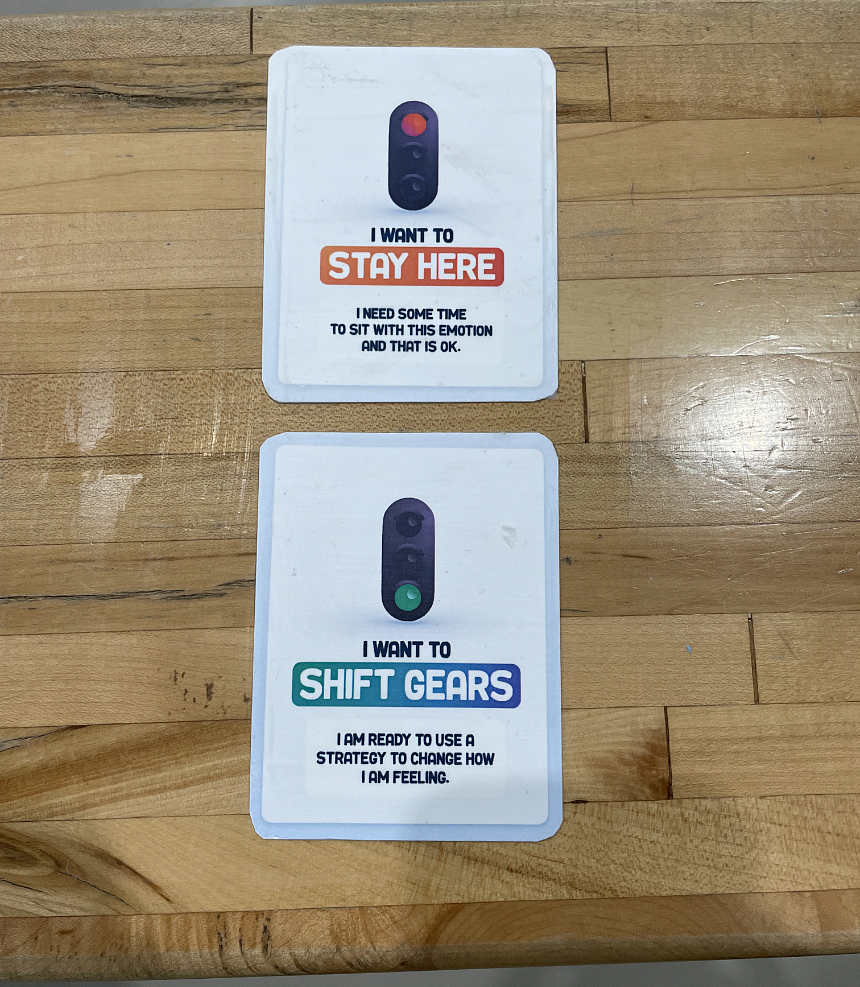
🚦 Step Four: Stay Here or Switch Gears. Finally, the student decides whether they're ready to head back into the lesson or whether they need a bit more time sitting with how they feel. Both are completely valid answers. For the kids who are ready to switch gears, I've got a set of 24 Calm Cards at the bench with strategies they can use to shift toward a feeling they'd rather have.
Again, the Breather Bench is never treated as a consequence. Because it never gets assigned as a punishment, something magical happens: kids start using it independently.
Almost every class, I see students take themselves to the Breather Bench, and then take themselves off of it to rejoin class. 99% of the time, I have no idea why they went to it, and that's ok. When it comes to regulation-driven behaviours, I don't need to be a part of the repair formula. I'm not in the kids' heads, and I'm not always around when feelings get stormy. The whole point is that they use this system, internalize it, and then take it with them wherever they go.
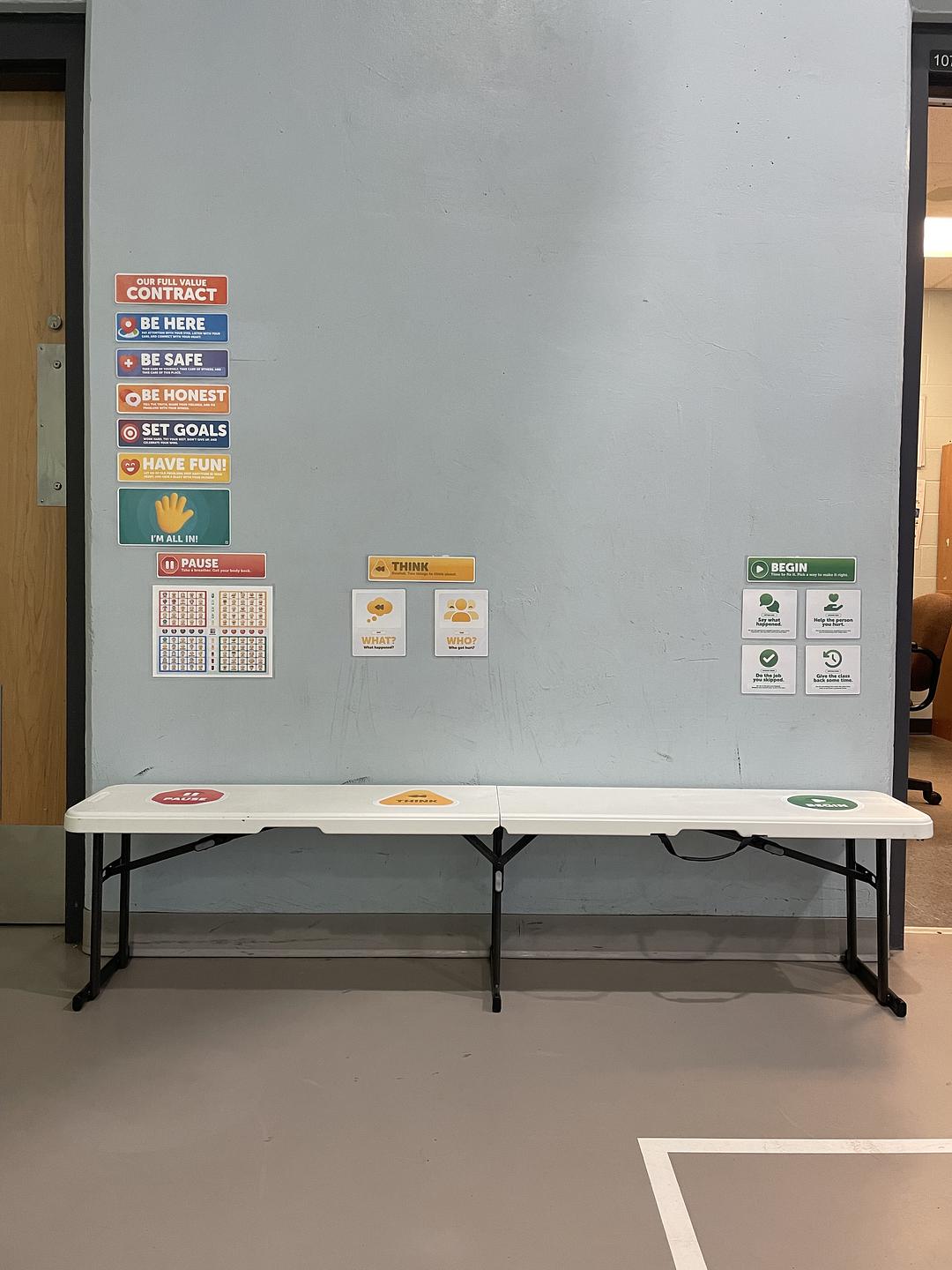
Responsibility-Driven Behaviours: The Make It Right Bench
This one is new, and it's the one I designed this summer.
My issue with only having the Breather Bench in my gym was that I didn't have a place to send students when they present responsibility-driven challenging behaviours.
I didn't want to send those kids to the Breather Bench, because that made the bench feel like a consequence. As I always tell my students, the Breather Bench is a tool, never a consequence. If I send a kid there when they are clearly choosing to be irresponsible, I'm basically destroying everything that I want the Breather Bench to be.
That said, I definitely need a place to send kids when they require a consequence because, Lord knows, consequence-deserving behaviours happen in my lessons. However, I didn't want it to be a dunce-cap-style corner. I also wanted whatever this place would become to lead to a positive outcome grounded in restorative practices (i.e. practices that aim to repair any harm created by the behaviour).
After diving deep into what works and what it can look like in PE, I came up with the Make It Right Bench. Here's how it works.
When a student demonstrates responsibility-driven challenging behaviours in class, I "invite" them (i.e. I tell them, I'm not trying to be fancy) to "make it right".
Making it right means going to the Make It Right Bench and following the system that I've laid out there. The whole thing works over three steps, with each step having a physical space on the bench that the students slide to as they complete them:
- 🛑 Pause
- ⚠️ Think
- 🟢 Begin
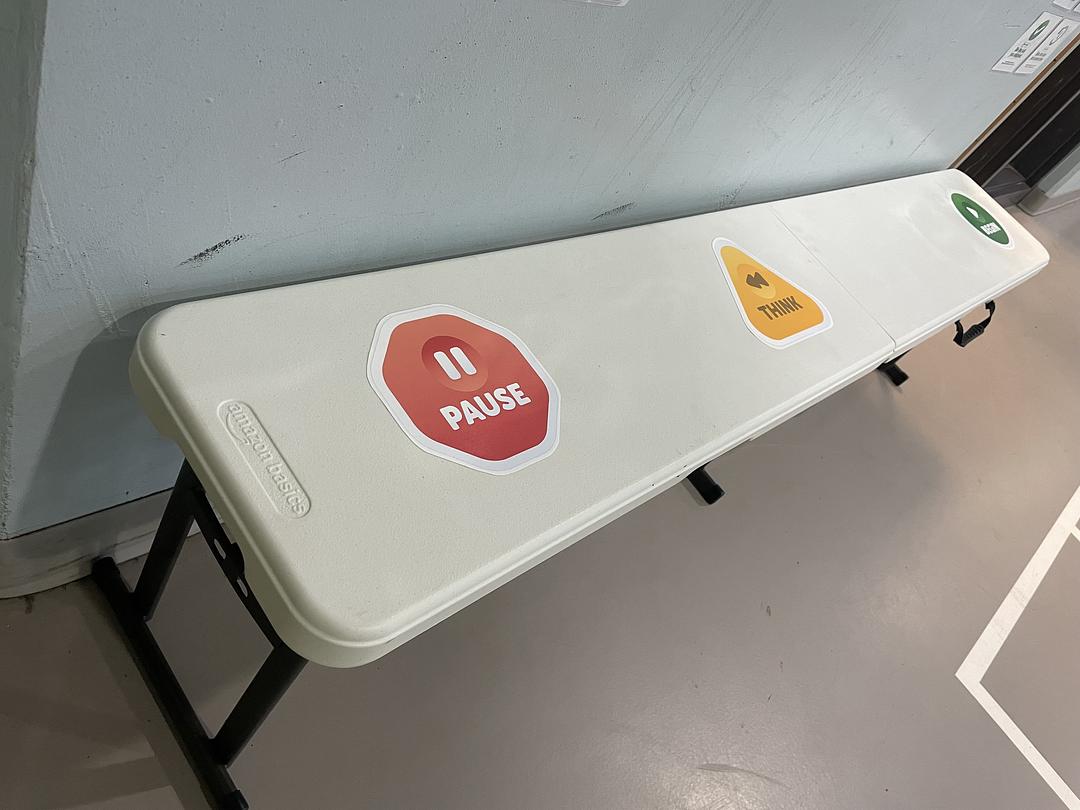
The purpose of the Pause step is exactly that: to pause and regain control of your body. Like I said earlier, challenging behaviours are usually a combination of both regulation and responsibility. The Pause step is there to make sure the kid can self-regulate before they do the rest of their work.
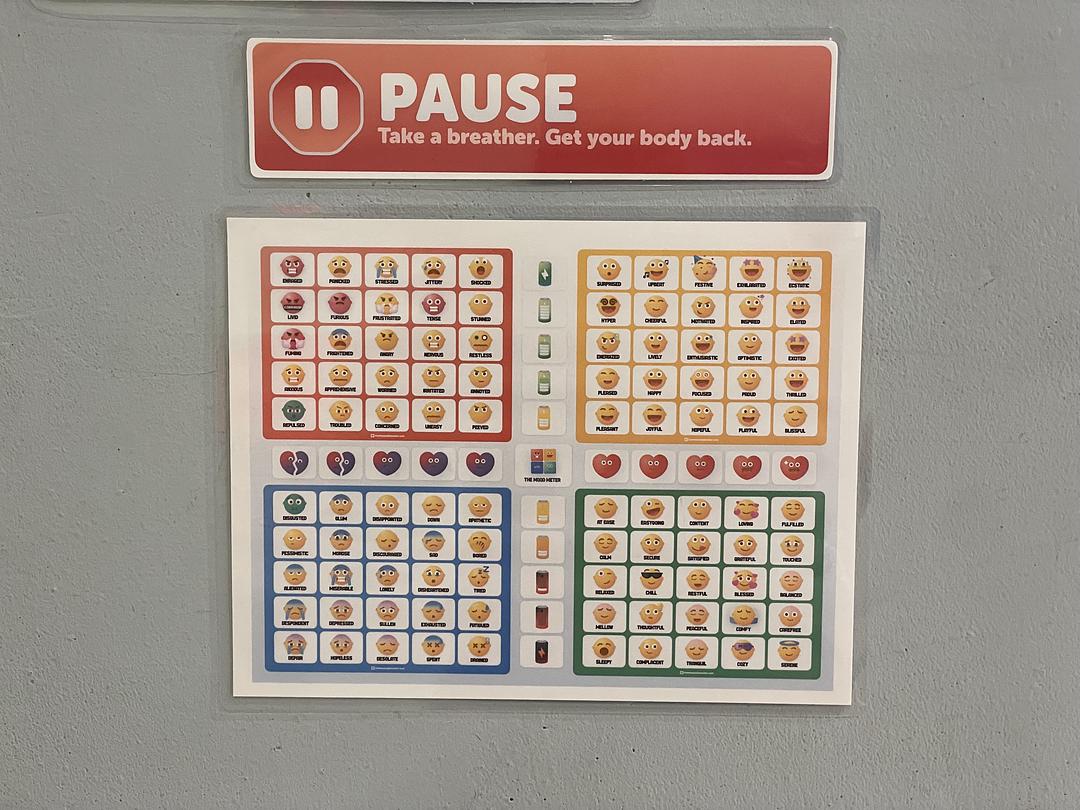
To help them with this, I've put a poster version of the Breather Bench at this stage. Students can use the poster to recognize their emotions, understand what is causing them, label them by name, and make sense of how they were being expressed through their actions.
Once the student has paused and self-regulated, they slide over to the second step of the Make It Right Bench: Think.
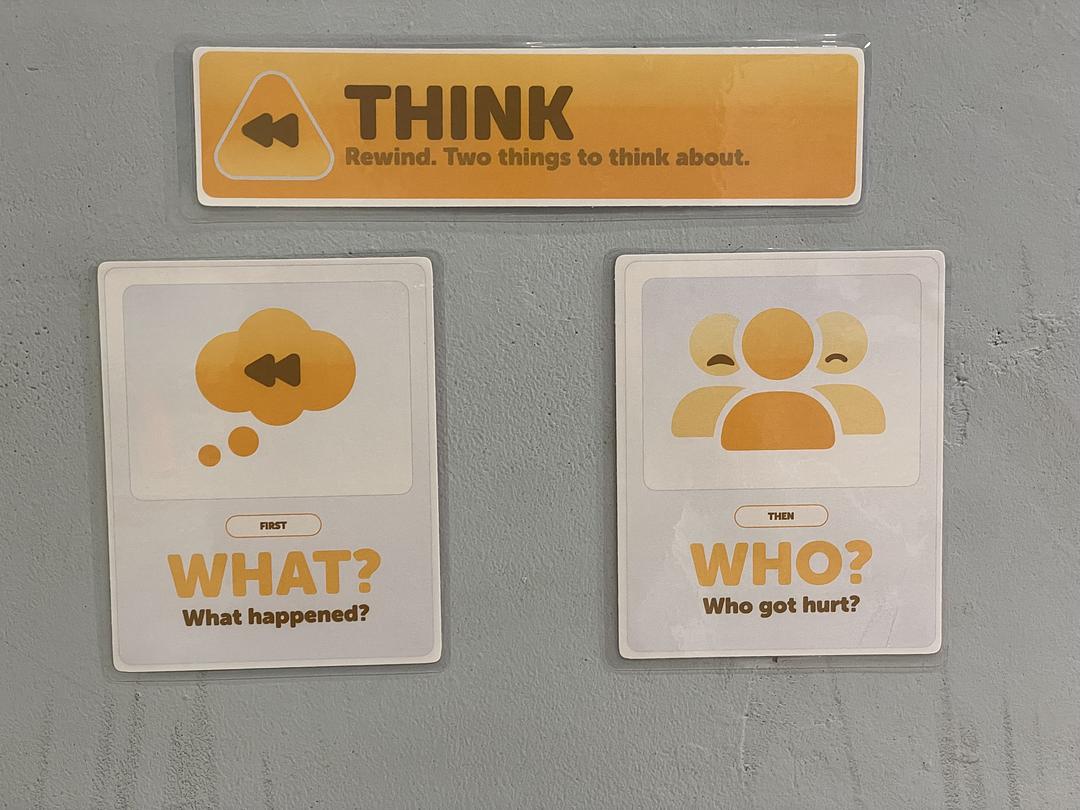
At this step, the students ask themselves two questions:
- 1️⃣ What happened?
- 2️⃣ Who did it hurt?
I use the language "hurt" instead of "affect" with my P-2 students as it is a simpler one for them to understand. At the start of the year, we talk about what "hurting" others can look like, and how feelings and thoughts can be hurt just as much as bodies can.
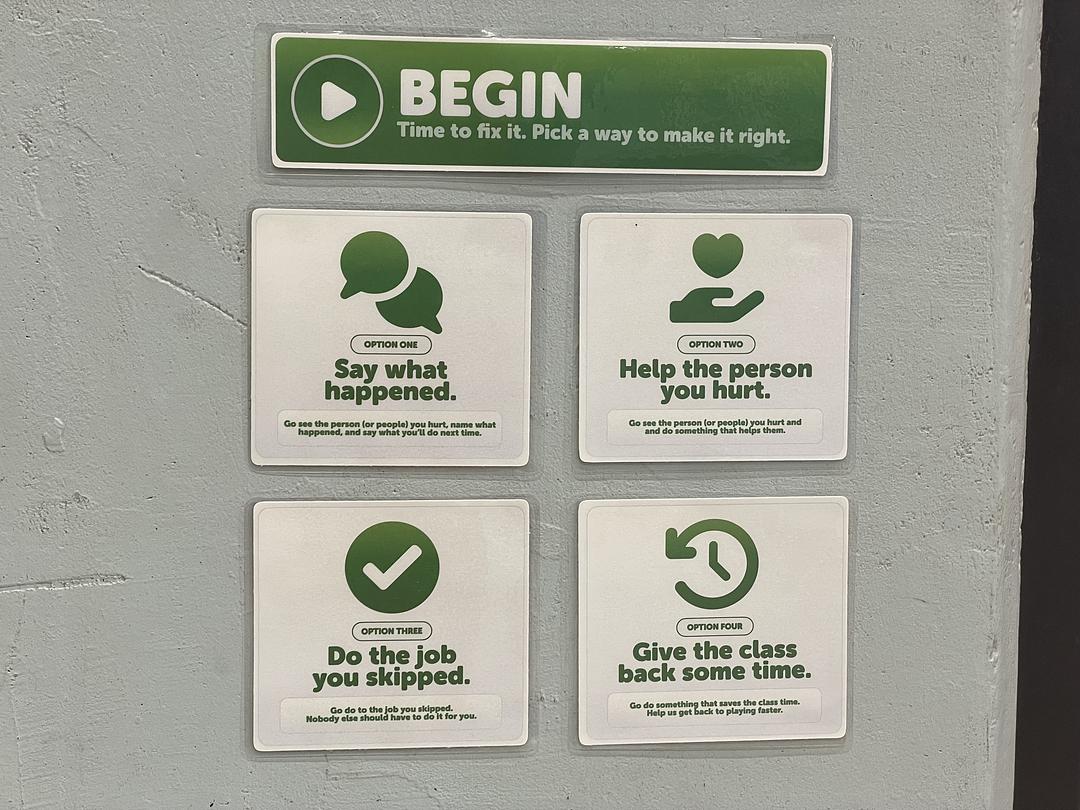
With the "what" and the "who" identified, the student then slides over to the third and final step: Begin.
At this step, the student gets to choose how they are going to make things right by repairing the harm their actions caused in class. At the Begin step, I give the kids the following four options:
- Say What Happened: go see the person (or people) you hurt, name what happened, and say what you'll do next time.
- Help The Person You Hurt: go see the person (or people) you hurt and do something that helps them.
- Do The Job You Skipped: go do the job you skipped and remember that it is not other people's responsibility to do it for you.
- Give The Class Back Some Time: go do something that saves the class time (e.g. help with takedown, help set up next class, etc).
Once the student is on the green "Begin" circle on the bench, I go over to them to chat. The conversation has to be SUPER SIMPLE, or else the whole system was pointless. The chat involves three questions, one statement, and one teacher action:
- What happened? They need to acknowledge what they did. I'm not asking them why or saying why it was wrong.
- Who did it hurt? They need to acknowledge who their actions affected. If they can't, I can make it very concrete for them (e.g. "Owen didn't get a turn because you cut the line.")
- What's your plan? They need to name how they are going to make things right as soon as they come off the bench.
- Go do it. I'm watching. The student then gets to go back into the lesson, but only returns to the activity once they have followed through on their plan. If they don't, they're back to the bench.
- Catch them being good. Within five minutes of the student leaving the bench and following through on their plan, catch them being good. Give them a fist bump for following through on their promise. Give them praise for making good decisions.
That last one matters more than it looks. The Make It Right Bench is a consequence, but it's also an opportunity. It's a fresh start, a chance to begin again, an opportunity to learn and grow. Catching a kid who had to make it right being good is a reminder that sometimes mistakes are part of growing up. That doesn't absolve us of any responsibility, but it also doesn't mean that making mistakes makes us a bad person.
Unlike the Breather Bench, I am very much a part of the Make It Right Bench's flow.
Part of that is because, when a kid has made a choice that hurt someone, I want them to know that they do indeed need to answer for it. That's what taking ownership looks like, and taking ownership is a big part of growing up.
But the other part is a lot less philosophical: a five year old simply cannot do this work on their own. Ask a Primary student who they hurt and there's a decent chance you'll get a blank stare. That's not because they don't care, but because tracing the line between what they did and how it landed on somebody else is genuinely hard thinking at that age. Same goes for coming up with a plan. So part of my job at the green circle is holding those questions steady while the student does the hard part, and stepping in with something concrete whenever they get stuck.
Wrapping Up
Look, I have no idea how well any of this is going to work.
I built the Make It Right Bench over the summer and, as I write this, it hasn't been within four steps of an actual seven year old. There's a good chance I'll be back here in a few months telling you which parts of it I got wrong (my money's on there being too many options at the Begin step, but we'll see).
What I do know is that going into this year with a plan for how challenging behaviours get handled in my gym has already done something for me. I'm not walking into September hoping the tough moments don't happen. I know they will, because they always do, and I know what I'm going to do when they show up. That's a very different feeling than the one I've carried into a few other school years, and after everything we looked at earlier about how this stuff wears teachers down, I don't think that feeling is a small thing.
Update: What Happened When Actual Seven Year Olds Got Involved
Well, that didn't take long.
Like velociraptors in a cage, my students love testing my systems for weaknesses. That was on full display in Tuesday's lesson, when several students decided to find out whether I would actually follow through on the Make It Right Bench.
For the record, it wasn't the Begin step. Two other things sent me back to the drawing board instead.
First, I had multiple kids wreaking havoc at the same time. What's funny is that most of these kids are the reason the Make It Right Bench exists in the first place, since they made my life very challenging last year. I realized quickly that the bench only works for one kid at a time. Two of them ended up at the Breather Bench instead, which defeats the whole point of the Breather Bench not being a consequence.
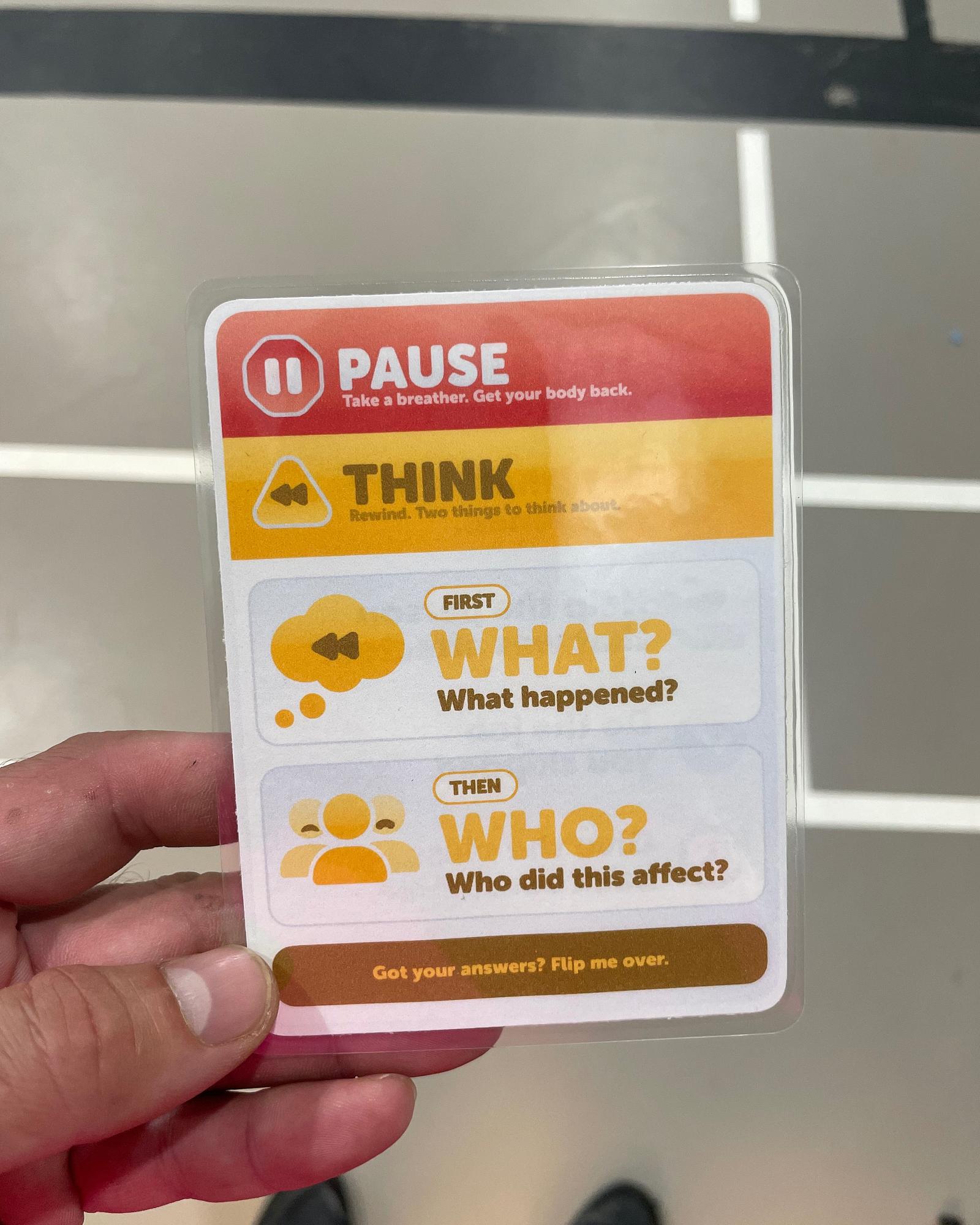
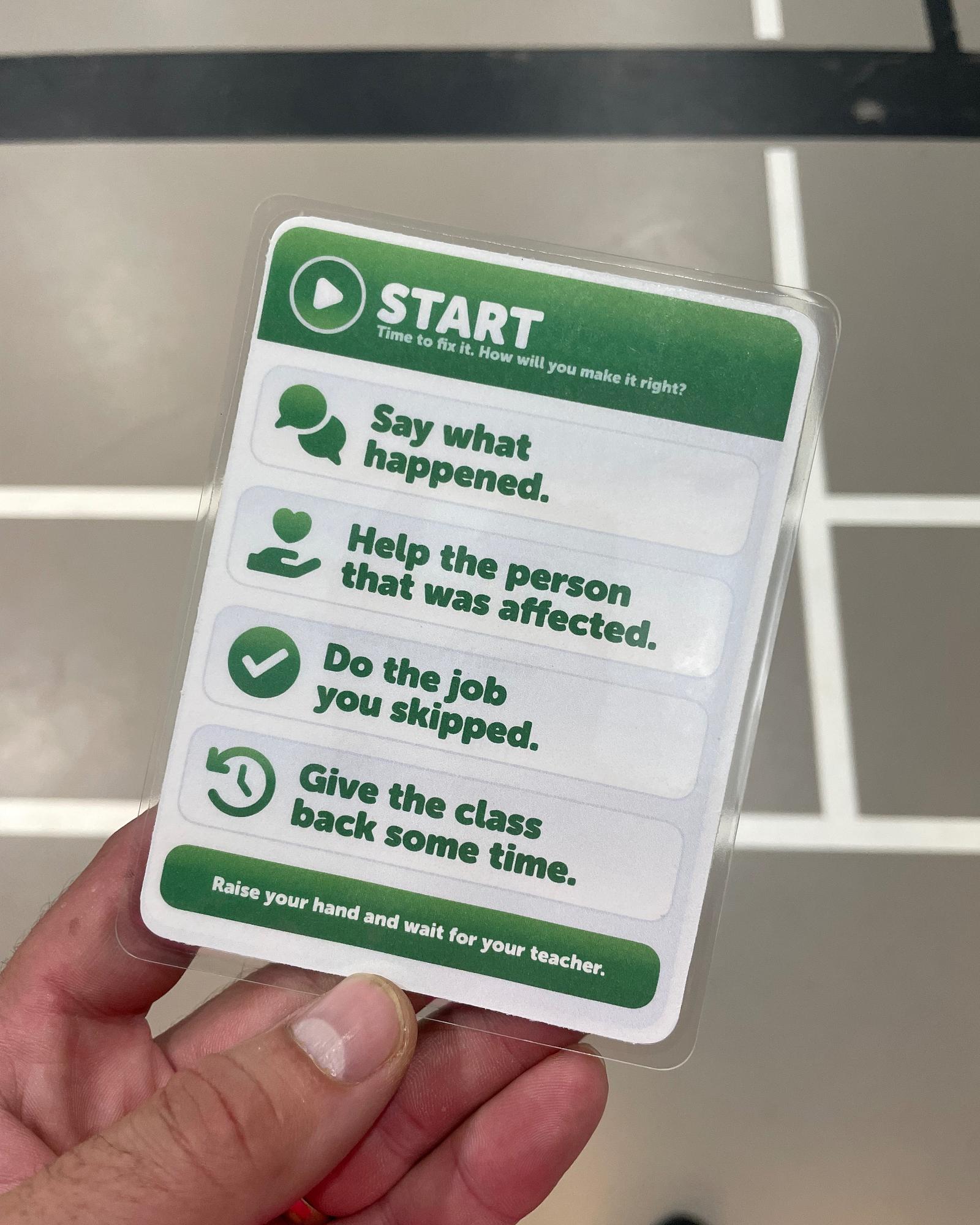
So here's what I came up with: the Make It Right Bench is still there, but I've also made a card version of it. I can hand a card to a student, and they take it to one of a couple of seats around the gym while they reflect on how they're going to make it right. Same three steps, same conversation at the end, it just doesn't need the bench to happen.
Second, I spent so much time getting those graphics to stick to my bench, and after just one visit, the student who is (again) the main reason this space exists started picking them all off. I realized that if his hands are idle, this is going to happen every time.
In class, we've been talking about how our actions affect others. (I've actually moved away from saying our actions "hurt" others, because hurt isn't always the right word.) We compare it to dropping a pebble in a pond: the ripples spread out and end up touching every part of the pond.
Since we were already using a pebble metaphor, I remembered the sensory pebbles I bought as fidgets for the Breather Bench. They're rubber pebbles with different textures on them. Now, when you go to the Make It Right Bench, you get a sensory pebble to hold so your hands stay busy and you're not picking at things while you're there.
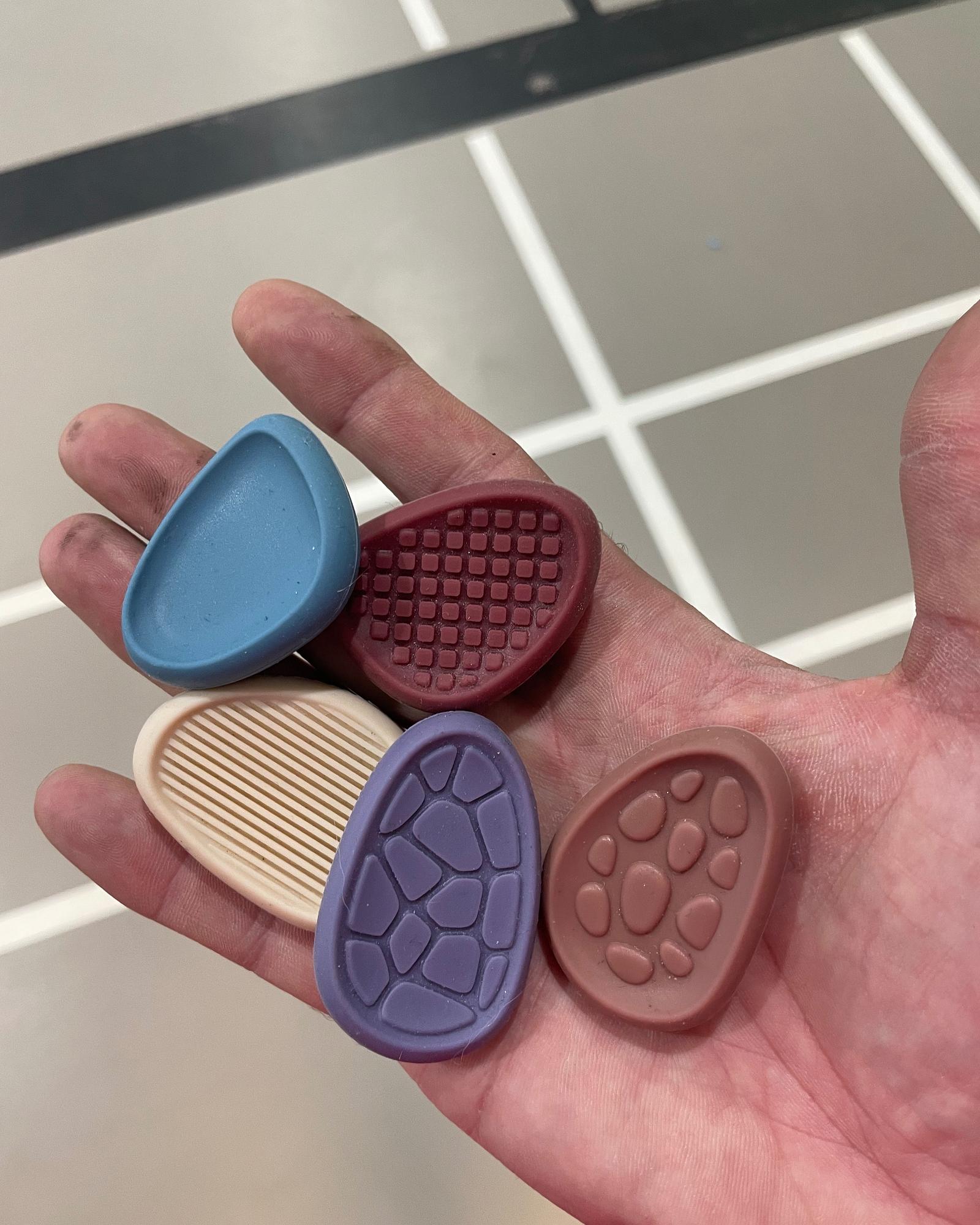
One more small thing while we're on the subject of language: the third step is now called Start instead of Begin. If you pick up the tools, that's what you'll see on the graphics and the cards, along with "Who did this affect?" in place of "Who did it hurt?"
Anyways, I'm doing my best to live out the "Better Every Day" mentality while also looking forward to these students moving out of the grade levels I teach. Just keeping it real over here, folks!
Want To Build This In Your Gym?
Both sets of tools are print-and-go, so you can have them on a bench in your gym this week.
If you're a #PhysEdU member, both sets are waiting for you in the Visuals space on campus, along with the conversations where teachers are sharing how they've adapted these systems for their own gyms and grade levels.
Happy Teaching!


