


In this post, I want to go over the systems that save my sanity, energy, and joy as a PE teacher.
Teaching phys ed in 30-minute blocks on a revolving door schedule, with very little breathing room in between classes, is a grind. It's a lot. It took me a good while to get used to it, and for the longest time I couldn't figure out why I was leaving every single day completely wiped. It wasn't for a lack of trying. I mean,I had goals: I wanted every lesson to be as effective as it could possibly be, and I was working hard to make that happen.
James Clear has a line about this that I think about constantly: you don't rise to the level of your goals, you fall to the level of your systems.
That was my problem: yes, I had the goals... but I didn't have the systems (yet!)
Every System Started As A Problem
I've written before about treating the things that come up in our teaching as pedagogical problems, because when you frame something as a problem it means there's a solution out there somewhere waiting to be found.
Every system I'm about to walk you through started as a problem I was actually having (and most likely ones you've encountered too!) I'm talking actual, annoying, recurring problems that were eating my time or my energy or both. And my systems aren't perfect... they're just the best solution I've come up with so far.
The other thing that changed everything for me was figuring out who these systems were for. For a long time I was the system: I was the one running around putting out fires for 30 straight minutes (and remember that I teach primary, so there are a lot of fires).
Once I started building systems that my students could operate without me, everything shifted. They are so much more capable than we give them credit for. When they handle the small stuff, I get to do the thing I'm actually there to do, which is teach.
So let me walk you through a lesson from my students' point of view, and you'll see what I mean.
In The Hallway: The Full Value Contract
My classes don't walk into the gym. They line up in the hall and wait for me to come out and greet them, and before anybody crosses the threshold we go through our Full Value Contract.
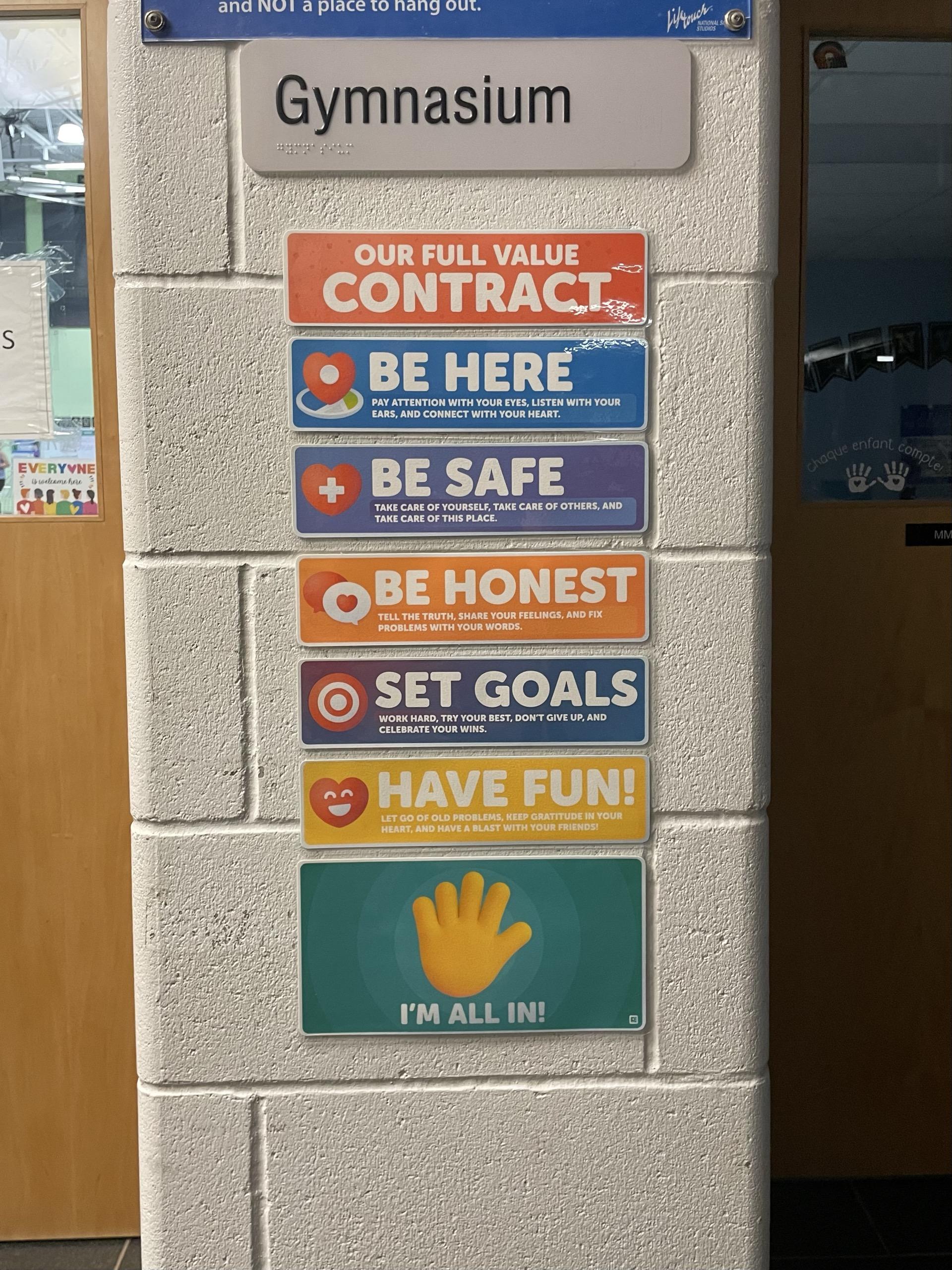
The Full Value Contract is an idea I took from Project Adventure's approach to adventure education. It's a shared agreement about how people are expected to behave together, and the whole point of it is that it gets revisited and recommitted to regularly rather than announced once in September and then forgotten.
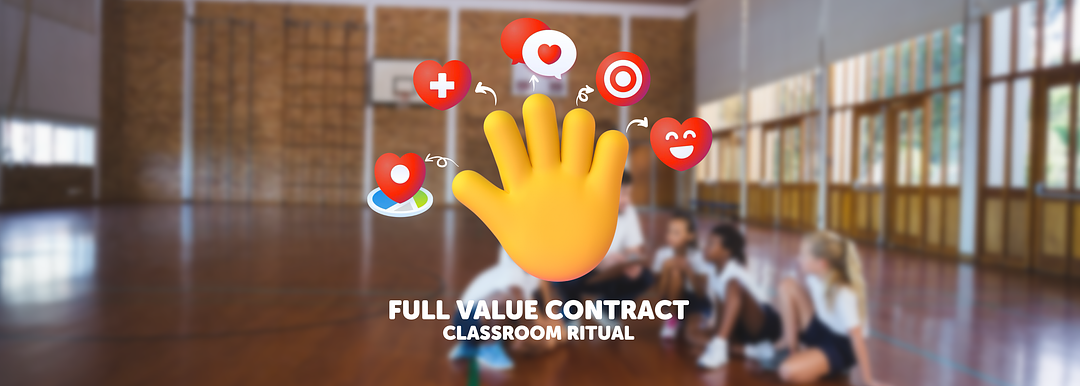
Ours has five parts, and each one lives on a finger:
- Thumb: Be Here. Pay attention with your eyes, listen with your ears, connect with your heart.
- Index: Be Safe. Take care of yourself, take care of others, take care of this place.
- Middle: Be Honest. Tell the truth, share your feelings, fix problems with your words.
- Ring: Set Goals. Work hard, try your best, don't give up, celebrate your wins.
- Pinky: Have Fun. Let go of old problems, keep gratitude in your heart, have a blast with your friends.
We run through it with our fingers in the hall, and then as students come through the door they tap the "I'm All In" card that's posted outside the gym.
Here's my favourite part of this whole thing, and it was a total accident. Our administrators say "gimme five" at assemblies all the time, the way administrators everywhere do, and I never actually knew what the five referred to. Now I do. In my gym, "gimme five" means show me you remember our Full Value Contract by putting up the five fingers, and show me the hand you used to commit when you walked in here.
That's the whole reason this system exists: when a student's behaviour or engagement or participation isn't meeting expectations, I'm not inventing a standard on the spot and I'm not making it about me being disappointed. I'm comparing what's happening right now to something they personally agreed to eleven minutes ago at the door. It makes the conversation about closing a gap rather than about getting in trouble, and it gives me language that every single kid in the building already shares.
Through The Door: Hydration Station And Bunny Bins
Two very small systems that solve two very annoying problems.
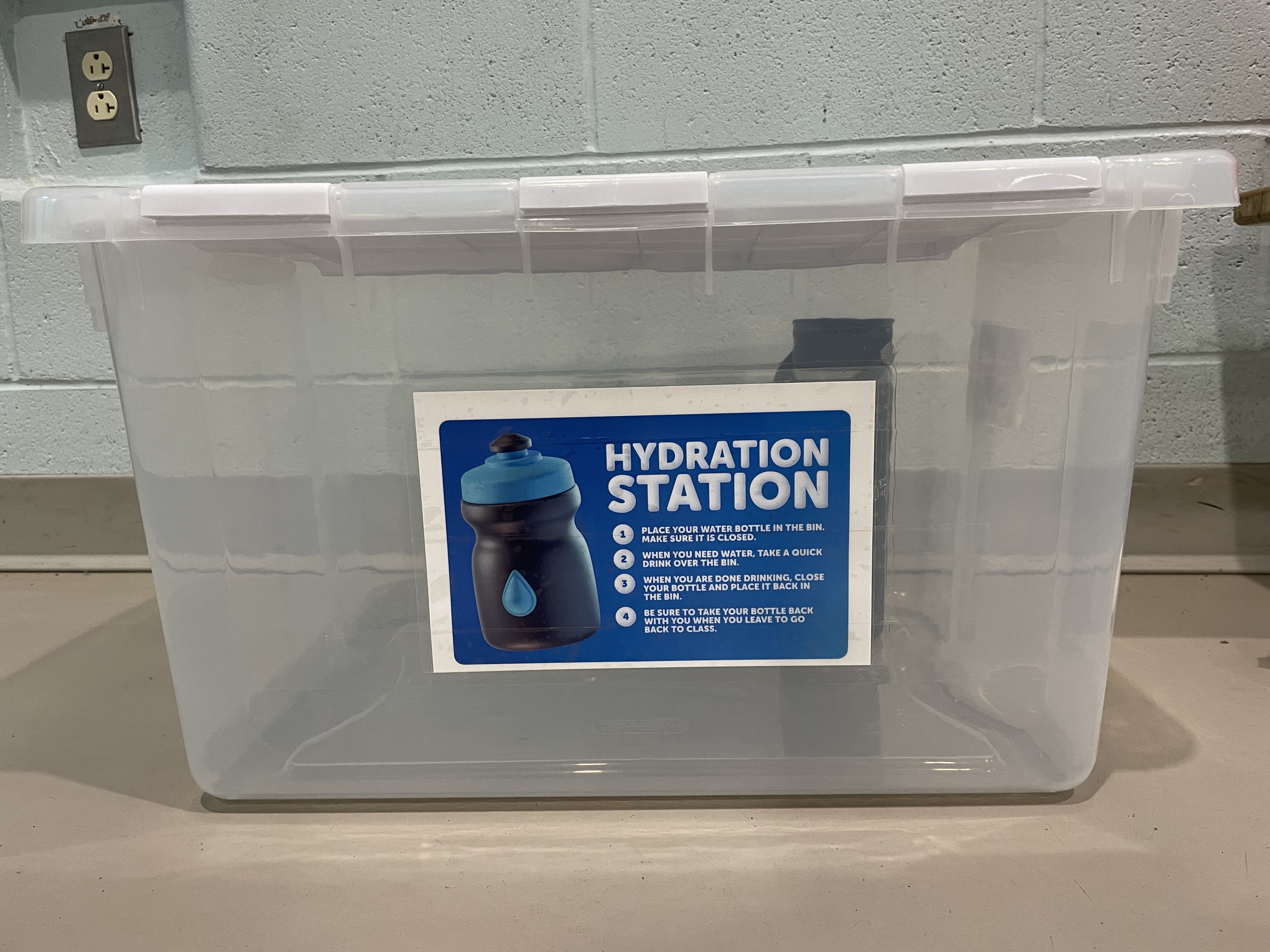
The Hydration Station is and idea I got from #PhysEdU member Krista Rahn. It's a 102 litre tote with a big sticker on it. Water bottles go in the tote when students arrive. If you want a drink during class, you go to the tote and you drink over the tote.
If you've ever taught in a gym with water bottles in it, you know exactly why this exists. Bottles get thrown, bottles get kicked, bottles get left, and bottles spill. I don't have time to mop between lessons. I definitely don't have time to deal with a kid slipping on somebody's water. Drinking over the tote means that when a bottle slips out of a small hand (and – Lord knows – it will), it lands in a big plastic box instead of all over my floor.
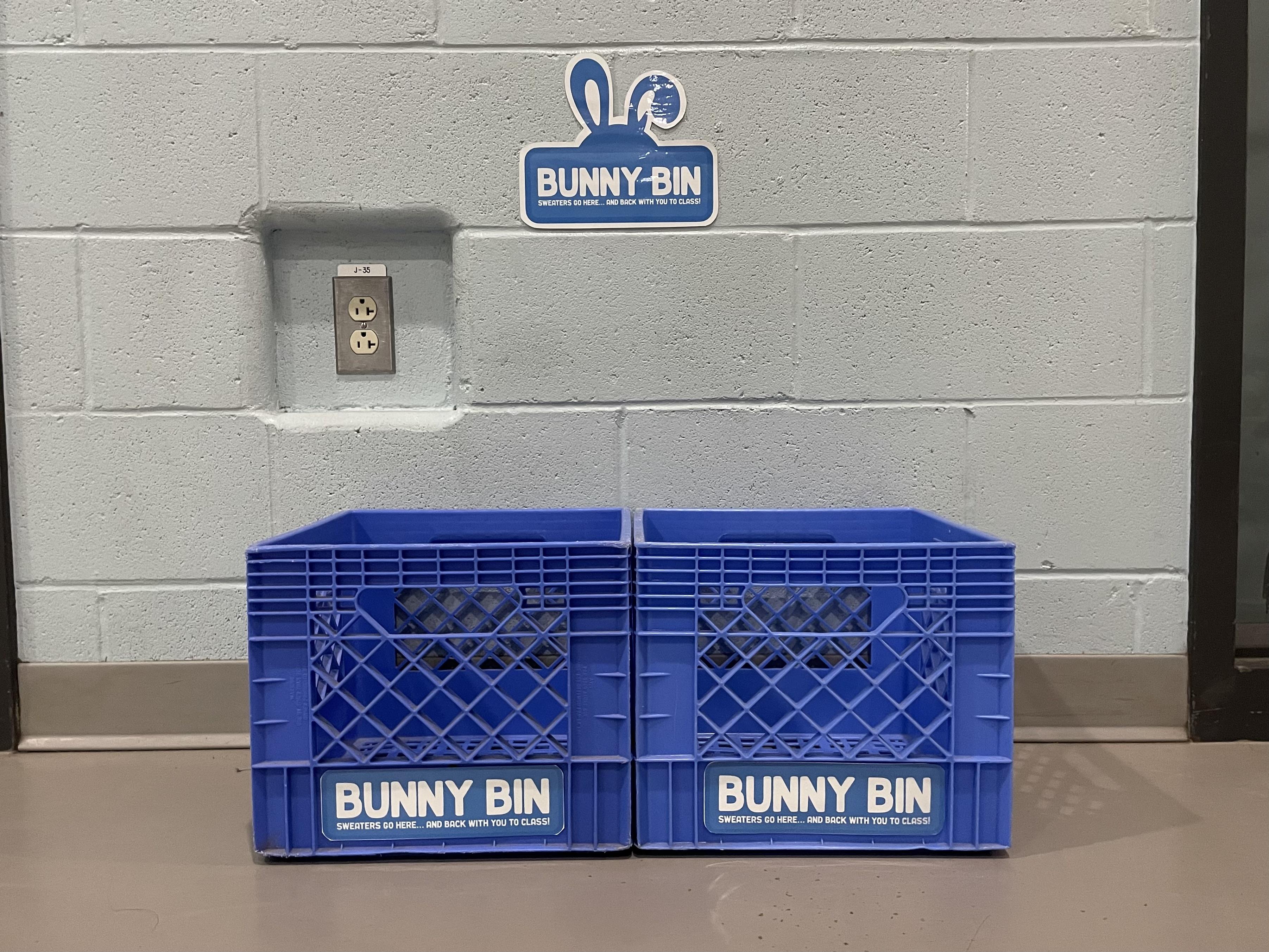
The Bunny Bins are two milk crates stacked on top of each other with labels on them. If you need to take off your sweater, if you brought a purse, if you've got anything that would otherwise end up on the floor, it goes in the bunny bin.
I'm not going to pretend I invented something clever here. I was just so tired of looking around my gym at the end of the day and seeing hoodies and hats and sweaters everywhere. I was very tempted to just scoop it all into the lost and found, except that our lost and found bins are permanently overflowing to a degree that makes them functionally useless.
So here's the trick that makes it work. When students line up at the end of class, they check the bunny bin. If something's still in there and nobody claims it, that top bunny bin goes back to the homeroom with them, and it stays with the class until somebody claims their stuff. That's why there are two: one leaves with the class, one stays for whoever's coming in next.
The amount of lost and found I deal with now is close to zero.
The First Few Minutes: Treasure Time
Once bottles and sweaters are sorted, it's Treasure Time.
Treasure Time is unstructured free play at the start of the lesson, and I owe the idea to Megaera Regan, who I first saw doing it.
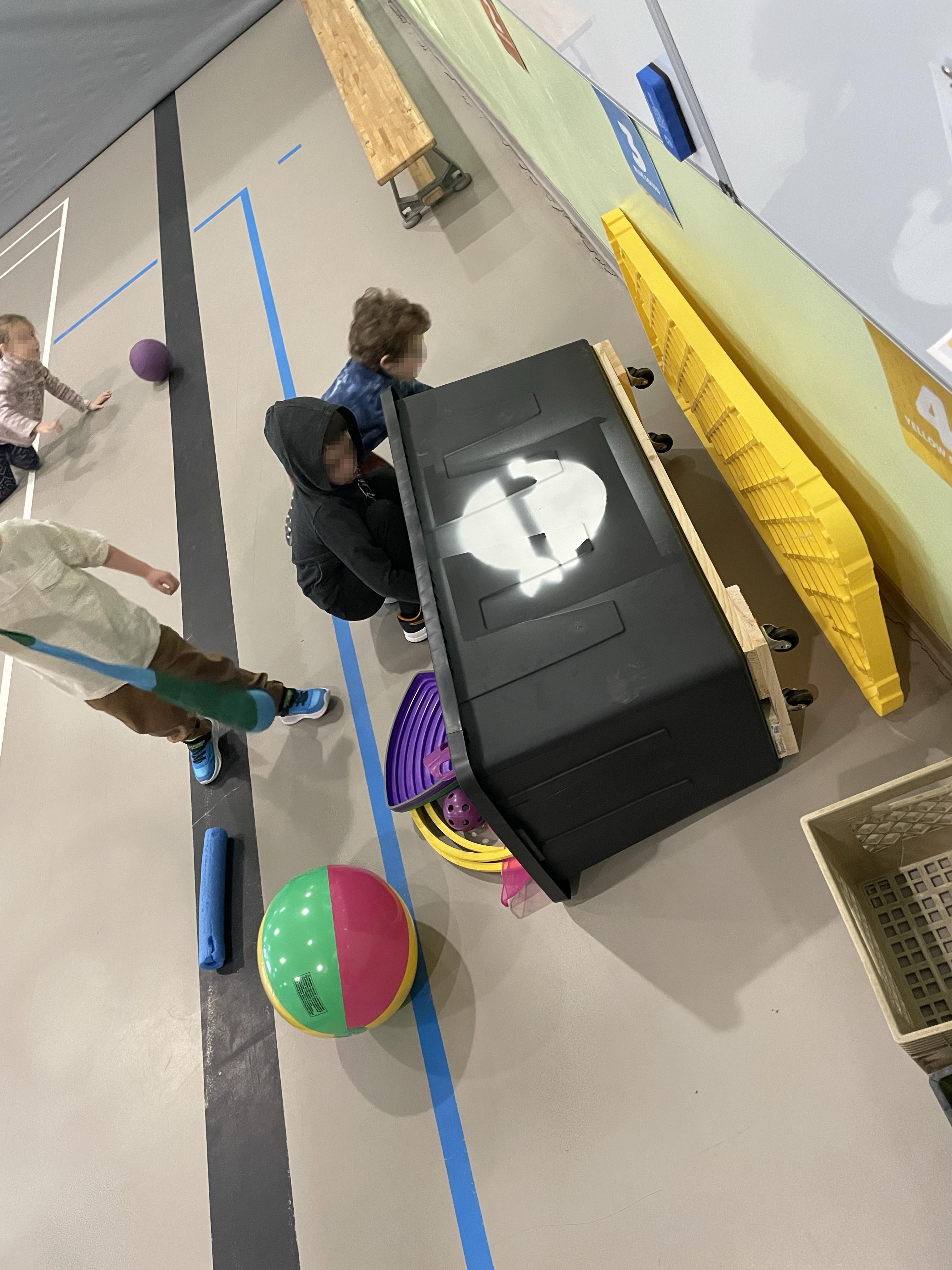
The Treasure Time box is a big tote I put caster wheels on so I can roll it out of the equipment room in the morning. Kids come in, they go to the box, they grab whatever they want.
There are two rules:
- Play in a way that's safe for yourself and for others.
- Don't leave the gym.
During Treasure Time my role is lifeguard (like the Hoff, minus any Hoffness). That's the word I use with myself and it's the word I use with the kids. I am there to save lives. I am not there to referee squabbles. I am not there to solve social problems. I'm scanning, I'm watching for safety, and I'm making sure everybody is in the gym and involved.
I've written a whole post about Treasure Time and the role of play in social and emotional learning, so I won't rebuild that argument here. What I will say is that the part nobody talks about is what it does for me. Treasure Time is a few minutes where I can eat a granola bar because I haven't eaten since 7am. It's where I set up my whiteboard for the next class. It's where I come back down to earth after whatever just happened in the last block.
I think that's worth naming honestly: a system that's good for kids and also lets the adult in the room breathe is not a compromise. Rather, it's the whole point.
Getting Going: Squads And What/Why/How
When Treasure Time ends, everything goes back in the box and the squads kick in.
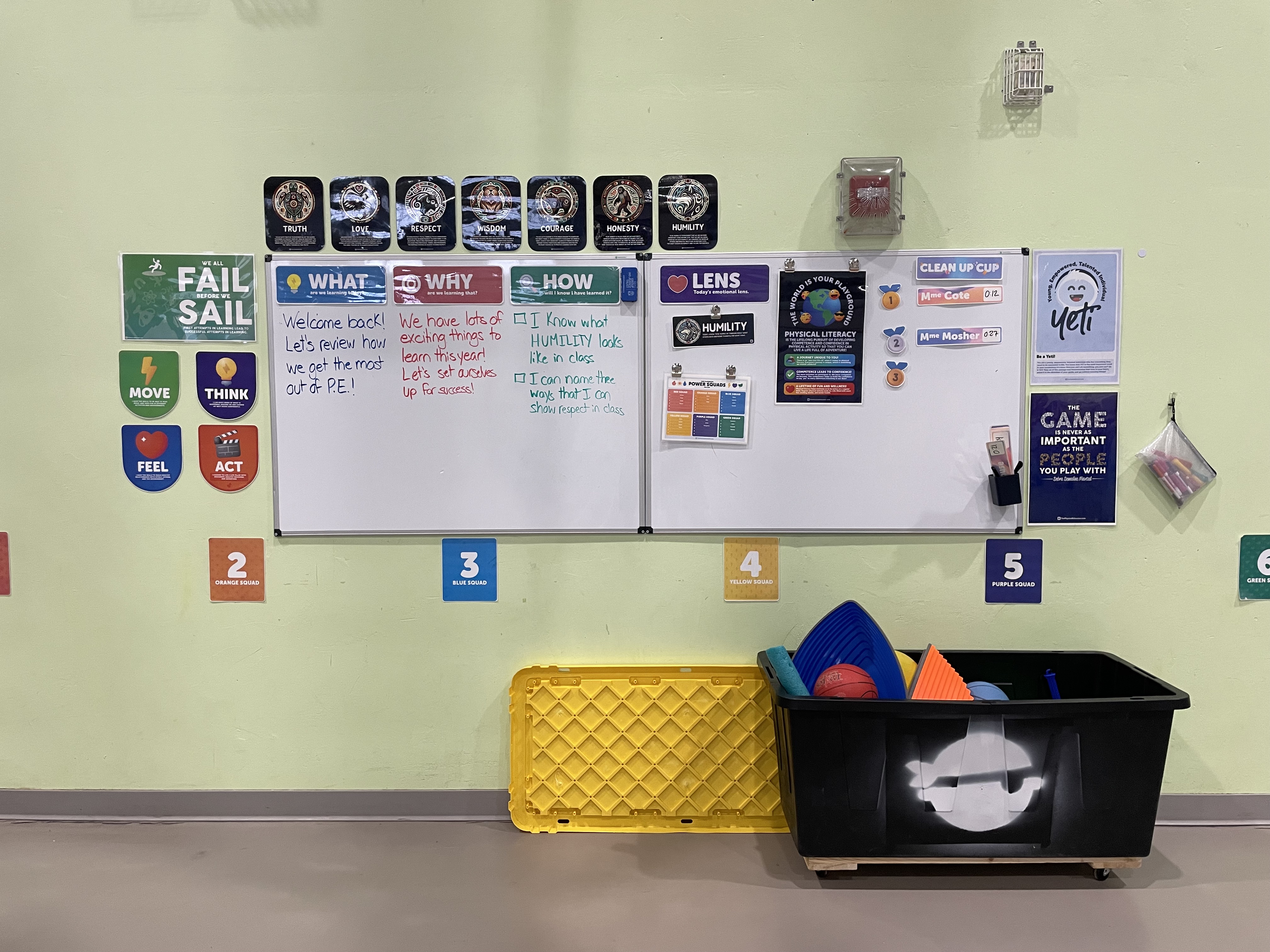
At the start of the year I split every class into six rainbow squads, and every student has a number within their squad. When they come to their squad lines, they sit in their number order. That's it. That's the system.
I cannot overstate how much arguing this has eliminated. Who goes first, who's on whose team, who stands where: all of it is already answered. Squad order determines turn order for everything, and my squad rosters live right by my whiteboard so I can take attendance at a glance and make sure every kid hears their own name at least once in a 30-minute lesson.
Then we do our What/Why/How, which is where the actual learning gets framed. During the How, when we're going through the learning targets, I set up a little check that we'll cash in at the end of class:
"If you leave here today and you can do [Learning Target 1], give yourself one pat on the back. If you leave here today and you can also do [Learning Target two], give yourself two pats on the back. Did you also achieve [Learning target three]? Show me your muscles!"
It takes about eleven seconds and I'll be honest, for a long time I thought of it as a cute ritual. It isn't. It's a self-assessment check against the learning targets, disguised as a gesture, and it happens twice: once as a preview at the start so students know what they're aiming at, and once at the end so they can tell me whether they got there. In a 30-minute block, that's about as efficient as formative assessment gets.
When Something Breaks: The Repair Systems
Here's the part of this post that I'd screenshot if I were you, because it's the pattern I'm proudest of.
Things break in class. Bodies get hurt, feelings get hurt, and friendships get hurt. Each one of those has its own place in my gym that a student can walk to without needing me first.
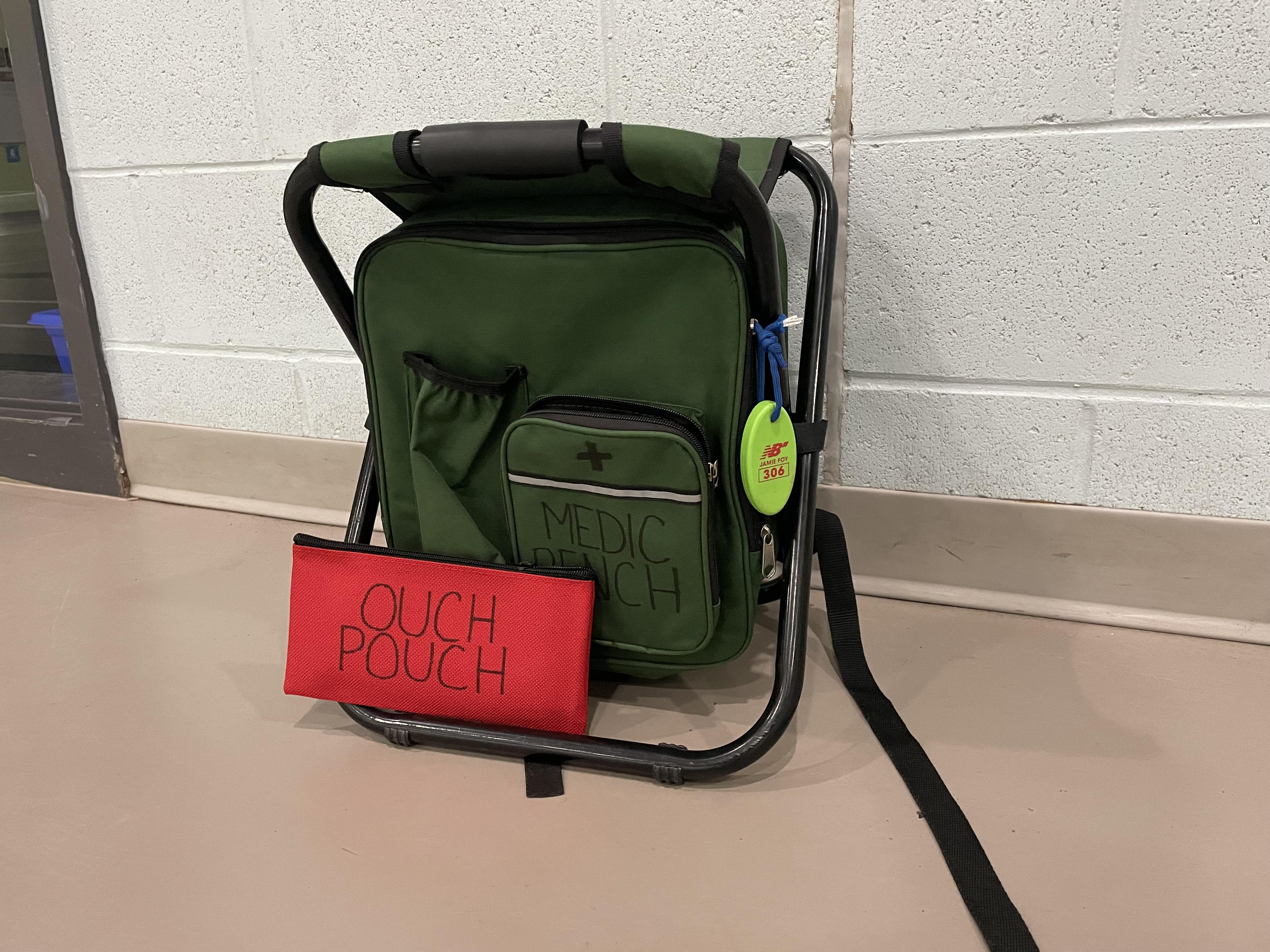
Hurt body: The Medic Bench.
A little camping bench in a distinct spot in the gym with ice packs and a few band-aids inside it. Trip, fall, bang a knee, and you make your own way over, sit down, and help yourself. Me seeing a kid sitting there is my cue to come check in. Most of the time what they actually need is an emotional support ice pack and thirty seconds, and then they're gone again. This ties directly into the first aid lessons I introduced last year, which have been a genuine game changer.
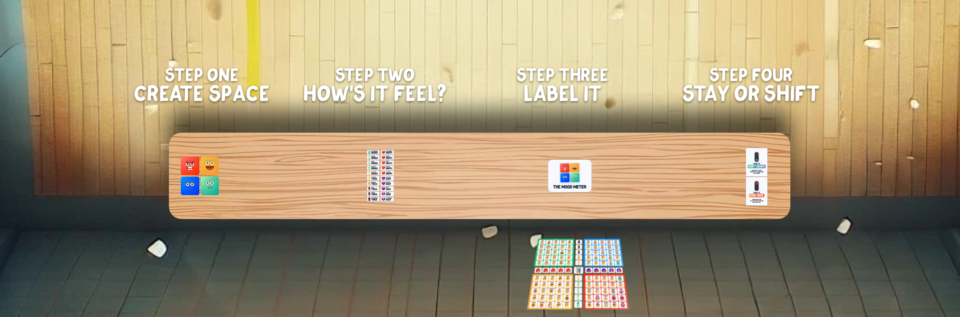
Hurt feelings: The Breather Bench.
Built on the RULER framework. A student goes over, checks in with what they're feeling, figures out how that feeling is landing in their body in terms of energy and pleasantness, and labels it on our mood meter board. Then they choose: stay and sit with it a bit longer, or shift gears. If they need support shifting, there are mindfulness cards right there.
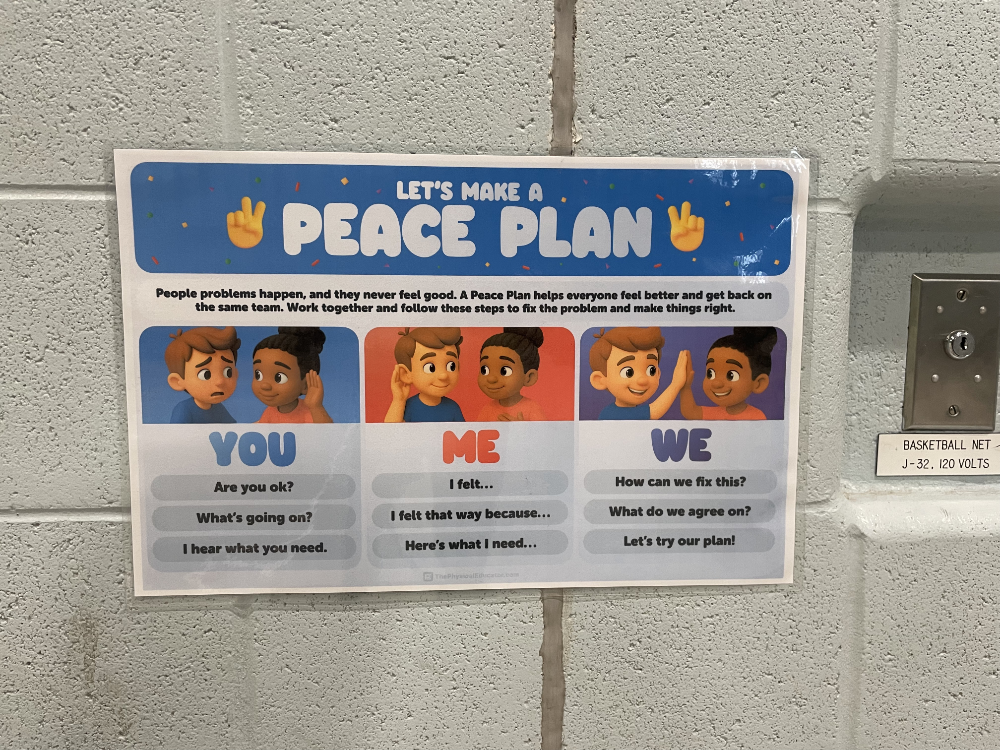
Hurt friendship: The Peace Plan.
Sometimes the hurt feelings are because of something that happened with somebody else. The Peace Plan is a guided process where two students work through the issue, get their feelings validated by the actual person involved, and then decide how they want to move forward. It's an evolution of the Conflict Corner I got from Ben Landers years ago and the Work It Out workshop I ran, simplified down for my little ones and, frankly, for the clock.
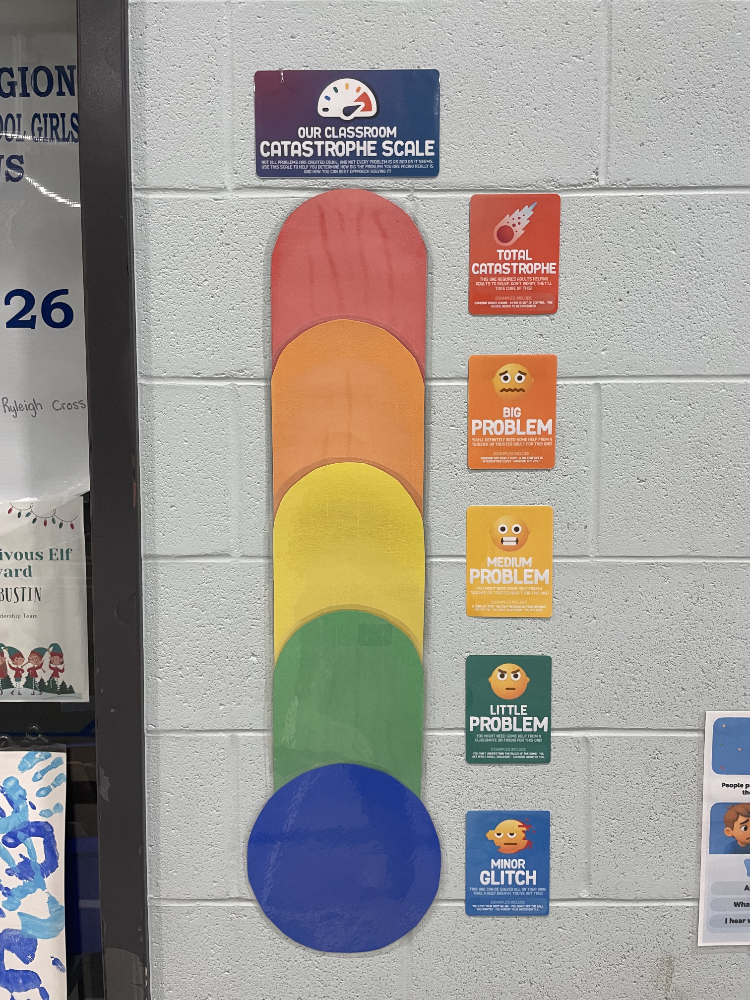
Running alongside the Peace Plan is the Catastrophe Scale (an idea I found on Instagram and loved), which helps students figure out whether the thing that just happened is actually a big problem. A lot of the time the answer is no, which means let it go. Once that language is in place, the tattling drops off a cliff and I stop having kids sitting out and sulking through half of the very short time we get together.
Hurt body, hurt feelings, hurt friendship. Three problems, three places to go, zero of them requiring me to drop what I'm doing.
On The Way Out
We line up alphabetically. That's new this year, and it's new because I am completely done arguing about lineup order and done with the pushing and shoving that comes with it. Some of my classes had an order, some didn't, and now they all have the same one. There's a star on the floor at the front of the line for the star of the day, since a lot of our homerooms already do that, and everybody else falls in alphabetically behind them.
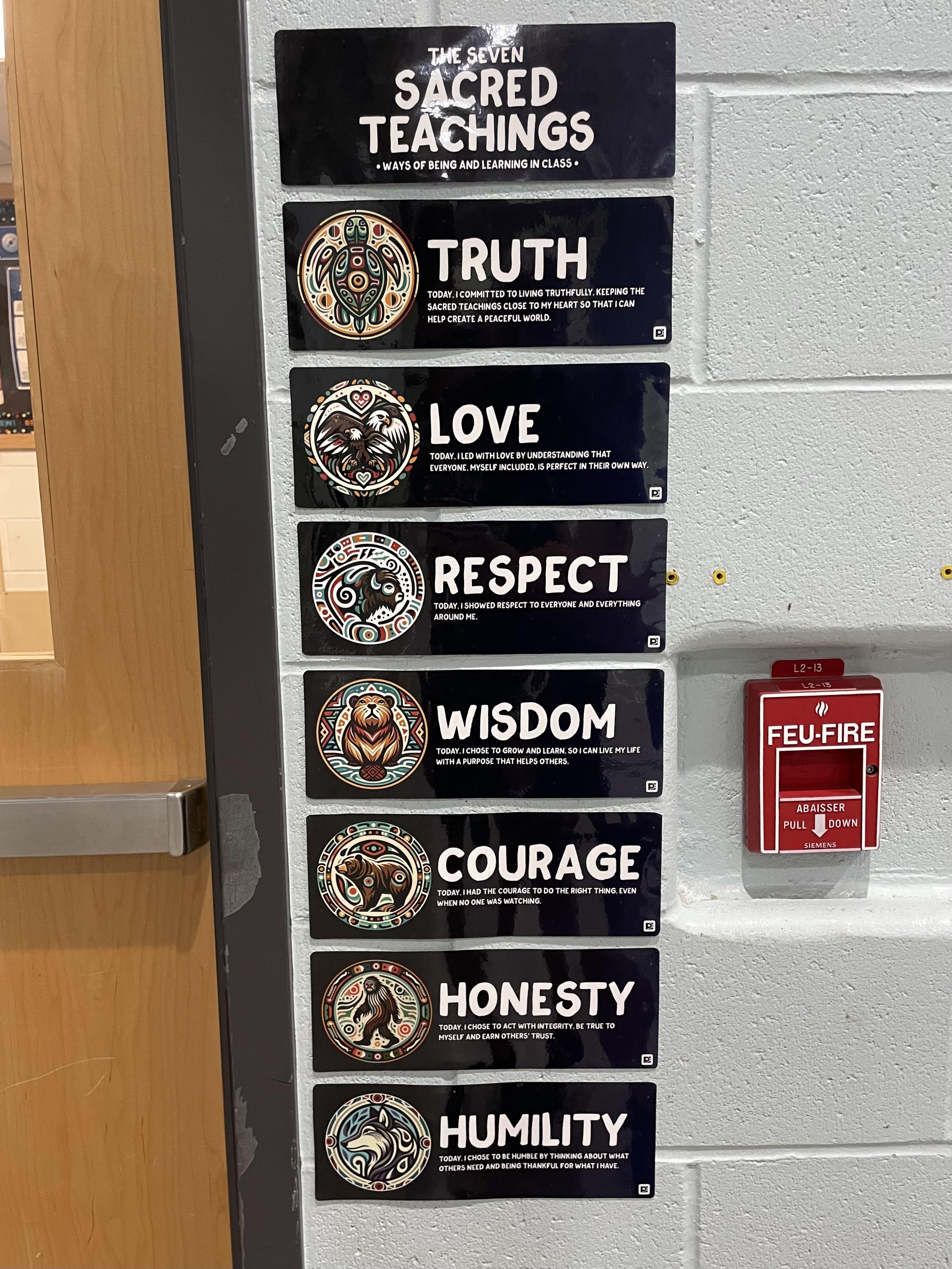
Then, on their way out the door, students tap that day's exit tap card.
Our exit cards are built around the Seven Sacred Teachings. Every lesson gets looked at through the lens of one of the teachings, and the tap on the way out is a quick reflection on whether you felt connected to it today. So if we're learning something brand new, the card might be Courage, represented by the Bear. If you took a risk today, if you weren't afraid of making a mistake, you tap the Bear on your way out.
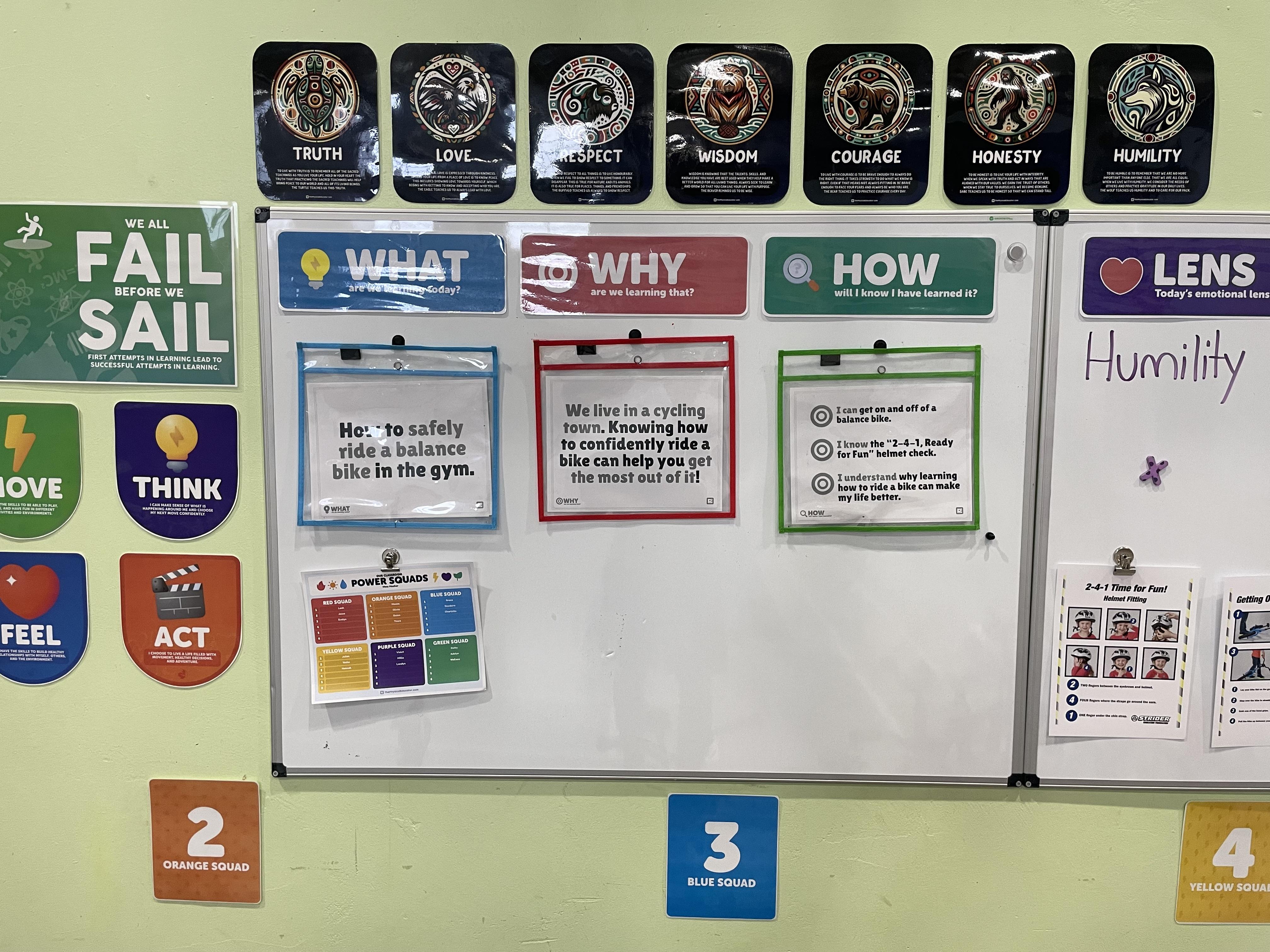
The kids love it. They ask me before class what the card is going to be, which means they know what they're aiming at before we've even started. (I've written about the Seven Sacred Teachings and the resources I built for them over in #PhysEdU, and that's getting its own post here soon, because it deserves more room than I can give it at the end of this one.)
But When Do You Actually Teach All Of This?
If you've read this far and you're now doing the math on installing eleven systems in September, I want to head that off, because this was the question I had to answer for myself first.
The systems do not get announced. They get played.
My Introduction unit runs eight lessons across about three weeks at the start of the year, and every single one of those lessons is a game. Not a game plus a procedures talk. A game, where the routine is the thing being practised.
- Freeze Dance teaches tuning in: the call, the response, the stopping.
- Ships Ahoy teaches tuning in when the gym is loud and busy and there's a lot going on.
- Hungry Hungry Hippos introduces squads through numbered pinnies in the squad colours.
- Number Call gets students finding their squad spot and their order without being told.
- Lesson Five is Treasure Time, and it gets a full block to itself. This is where the door routines get taught, and they get taught to the individual kid who needs them, in the moment they need them, and then broadcast to the room. Somebody's thirsty? Now the whole room learns about the Hydration Station.
- Lesson Six runs the full lesson shape for the first time, start to finish, the way it'll run for the rest of the year.
- Lesson Seven brings in the Seven Sacred Teachings.
- Lesson Eight is when we finally build the Full Value Contract.
I want to sit on that last one for a second, because it's the move I'd most want to pass on.
The tap has been happening at the door since Lesson One. Nobody explains it. Kids walk in, they tap the card, and we play. By Lesson Eight they've had three weeks of actually living inside this thing, and then we build the contract, out of their words rather than mine. What does it look like when someone is being here? What did being safe look like on Tuesday when the beanbags were everywhere?
They've got answers, because they were there.
That's the difference between a contract and a poster. If I announce the expectations on day one, I get compliance, and I get about a week of it. If I let them live it for three weeks and then ask them to name it, I get ownership.
The rest of the systems arrive when there's a reason for them. The Breather Bench, the Peace Plan, and the Catastrophe Scale all come in during our Big Feelings unit a couple of weeks later, because there's no point installing conflict resolution tools before there's been any conflict (ahhh... the blissful Honeymoon phase of the start of the school year). The Medic Bench gets folded into our first aid work later in the year.
Where To Start
If you're reading this in your empty gym in late August feeling behind, please don't try to build all of this. I didn't build it in a year and I'm still changing pieces of it.
Pick your loudest problem. The one that's actually costing you time or sanity every single day. Then build the smallest thing that solves it, put it in front of your students through a game rather than a speech, and let them run it.
Then next month, pick the next one.
I hope you got something useful out of this post! If you'd like to discuss any of these ideas further, come join us on #PhysEdU! This is exactly the kind of discussions that we love to have there.
Happy Teaching!


