


My physical education program includes activities that might seem a little odd at first glance. Mountain biking, skateboarding, fire building, hunting... there's no lack of risk in any given week.
As a reminder, I teach Primary (a.k.a Kindergarten) to Grade Two. If you have any experience with these grades, you probably already know that tears come with the territory. Every bump comes with a deluge of tears, and each scrape is perceived as life-threatening (at least initially).
While I'm not here to dive into the salutogenic underpinnings of my teaching philosophy, I will say that my goal is to empower my students to get the most out of life and that I believe developing a healthy relationship with risk is essential to that goal. Just like any healthy relationship, developing a relationship with risk requires spending time with it, getting to know it, and coming to understand what makes it tick.
It also means learning how to handle risk when things don't go as planned.
Don't get me wrong: my topmost priority is and always has been to keep my students safe. That being said, I do not believe that the best way to do so is by bubble wrapping them and keeping them out of harm's way at all costs. Bumps and bruises are sometimes part of how we learn, because learning comes from doing.
So here's how I flipped the script: rather than designing a physical education program that is as safe as possible, I've built one that is as safe as necessary. Instead of going crazy trying to figure out how to prevent kids from getting hurt (which, as they constantly prove to me, is impossible), I've chosen to teach them what to do when they do get hurt so that it becomes less scary.
For the first time in my teaching career, I decided to teach my P-2 students about first aid. Having seen the lasting impact of these lessons, I 100% regret having not taught them earlier!
Here's how I went about it:

⛑️ First-Aid Lessons
The first part of making getting hurt less scary for students was to teach them that some injuries are small and some injuries are serious.
The difference between the two doesn't have to do with the pain involved (getting hurt hurts), it just has to do with who needs to get involved to care for the injury.
Small injuries include things like scrapes, bumps, bruises, scratches, and small cuts. While they definitely can hurt, caring for these injuries is usually pretty straightforward: clean it, ice it, patch it, or leave it. Once students know how to care for each of these small injuries, they can learn how to perform first aid on themselves (more on that in a sec).
Serious injuries include things like head injuries, bleeding that cannot be controlled, broken bones, sprains, passing out, or asthma attacks. These situations need to be treated with special care, so getting adults involved is essential.
To practice identifying small injuries from serious ones, my students played a modified version of Hospital Tag.

Got tagged by a tagger? Hold on to the area you got tagged and keep fleeing. Got tagged a second time? Hold on to the second area you got tagged and sit down.

First aiders are in the game wheeling their stretchers (scooters) to help sitting players. Once at a sitting player, the first aider rolls an injury die.
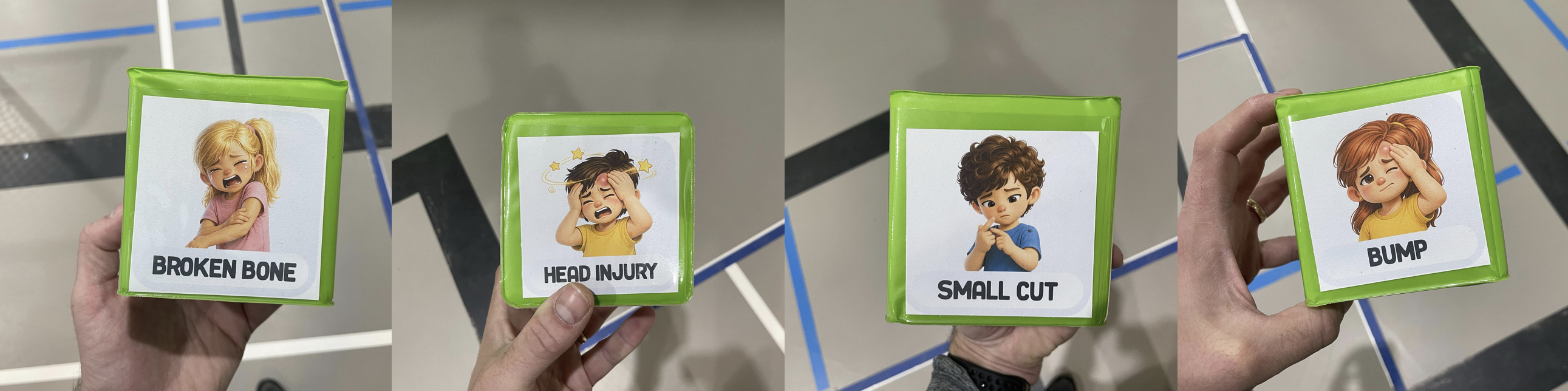
I made the injury dice with pocket dice that I ordered on Amazon. Each die showcases four small injuries and two serious injuries. If the die lands on a small injury, the first aider and sitting player can "care for" the injury there and the player gets back in the game. If the die lands on a serious injury, the sitting player hops on the first aider's stretcher and gets wheeled to the hospital. Once there, the "injured" player recites one piece of personal information (full name, home address, home phone number) and goes back into the game.
The small vs serious language has stuck with my students. When a kid gets hurt in class, most of the tears are coming from fear rather than pain (as most injuries in class are small and not serious). Identifying the injury as a small one has helped students calm down so much faster than they would have prior to our first aid lessons. Here's the language I use with my students:
👨🏻🏫: "Is this a small or serious injury?"
🧒🏽: "Small"
👨🏻🏫: "Remember, small doesn't mean that it doesn't hurt. It just means you don't have to be afraid of it. Let's patch you up."
The language has helped my students gain a sense of control in a situation where they initially felt helpless. That's an empowering feeling, and definitely one that I wish I had known how to give my students earlier in my career.
🩹 The Ouch Pouch
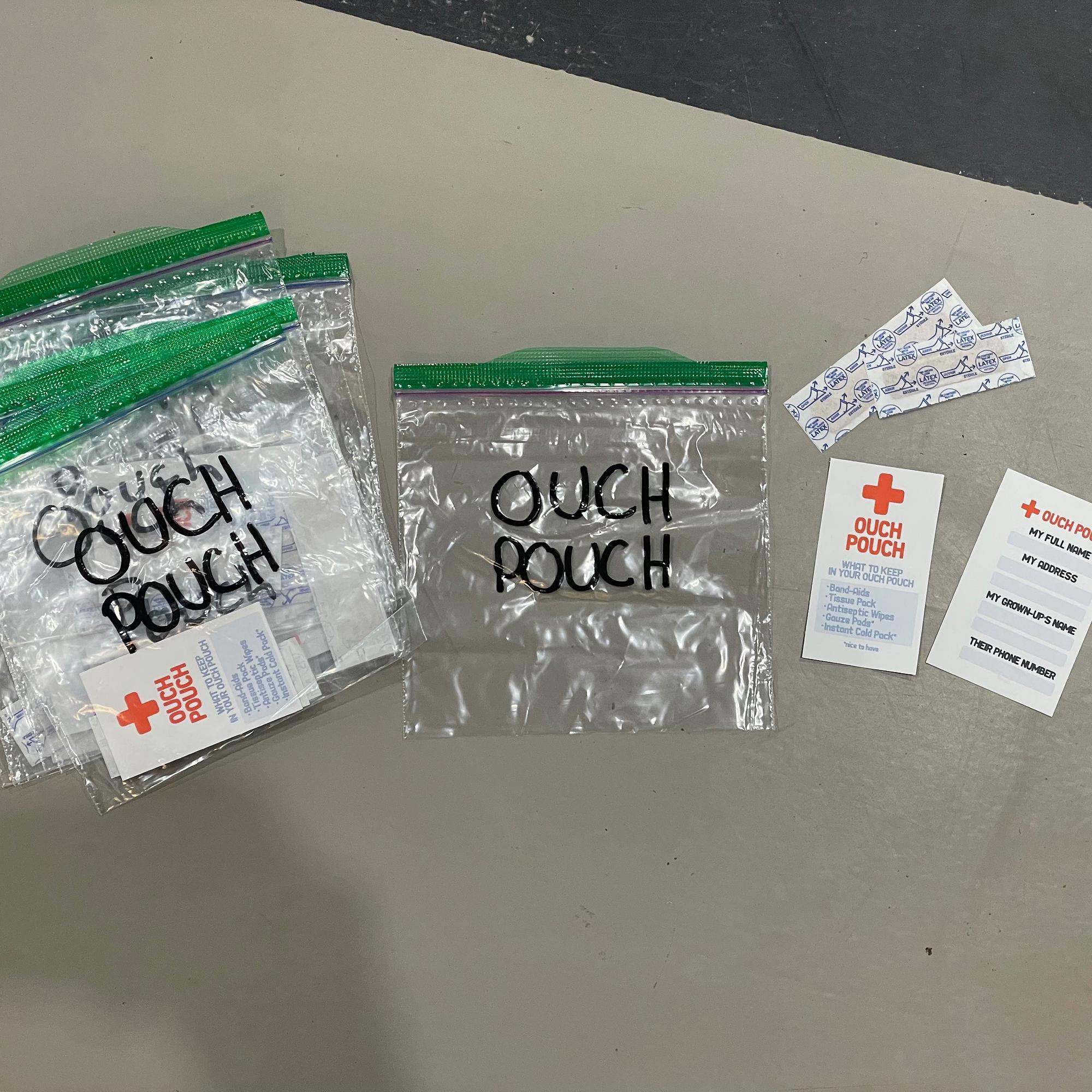
As a final sendoff for these first aid lessons, each student got to leave with their own “Ouch Pouch”.
The Ouch Pouch is a small first aid kit that wraps up everything we've been learning. Inside each bag, I added two latex-free band-aids and a personal information card. One side of the card had spaces for students to fill in their personal information (i.e. their name, address, and a grown-up's name and phone number) with the help of their parents/guardians. The other side had a short list of items they could add to the pouch over time to build it into a more complete little kit.
The idea is that the Ouch Pouch lives in each student's backpack so they always have it with them. The whole purpose of these first aid lessons was to help kids feel that a) they can handle small injuries and don’t need to be afraid of them, and b) they know what they need to know if they got in trouble (e.g. seriously hurt, lost, etc).
🪑 The Medic Bench
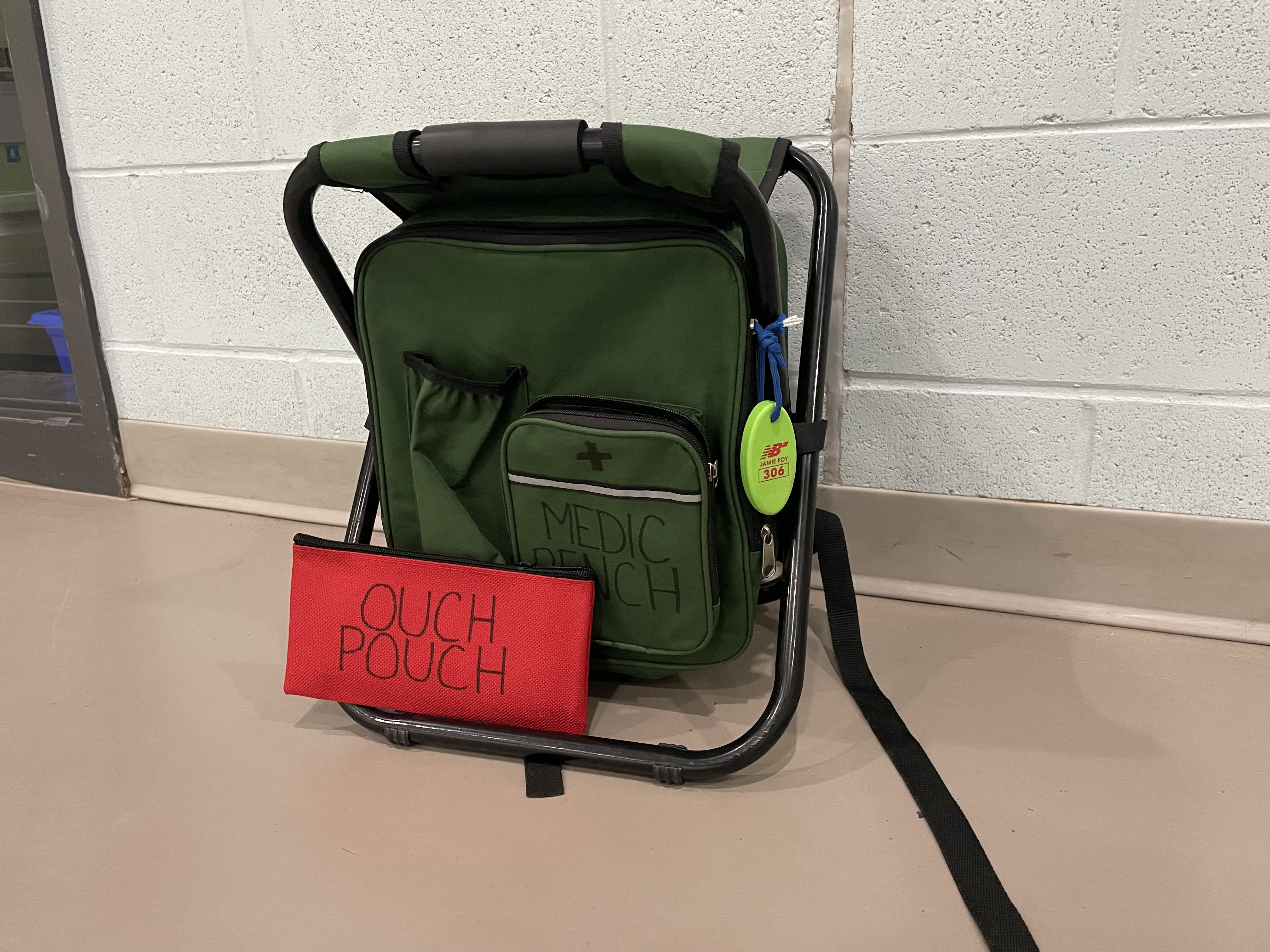
For the times when we get hurt and need to remove ourselves from the game, that’s what the Medic Bench is for.
I bought this little green camping chair off of Amazon. My intention is to stitch a red First Aid patch to it. The bench has a built-in cooler, in which I’ve put reusable, soft ice packs. I also put my own Ouch Pouch that has latex-free band-aids in it.
When a kiddo gets hurt and feels that they cannot carry on, they go to the Medic Bench, sit down, and either grab an ice pack or use the Ouch Pouch that lives there. By not simply going to the bench, this informs me that the student is physically hurt and requires my attention.

📗 Freya The First Aider
As important as it is for students to know what to do if they get hurt, they also need to know what to do if they see someone else get hurt.
To help me prepare for this part, I purchased the book “Freya The First Aider”: an Australian book designed to teach kids first aid through stories, with each story focused on a different first aid situation.
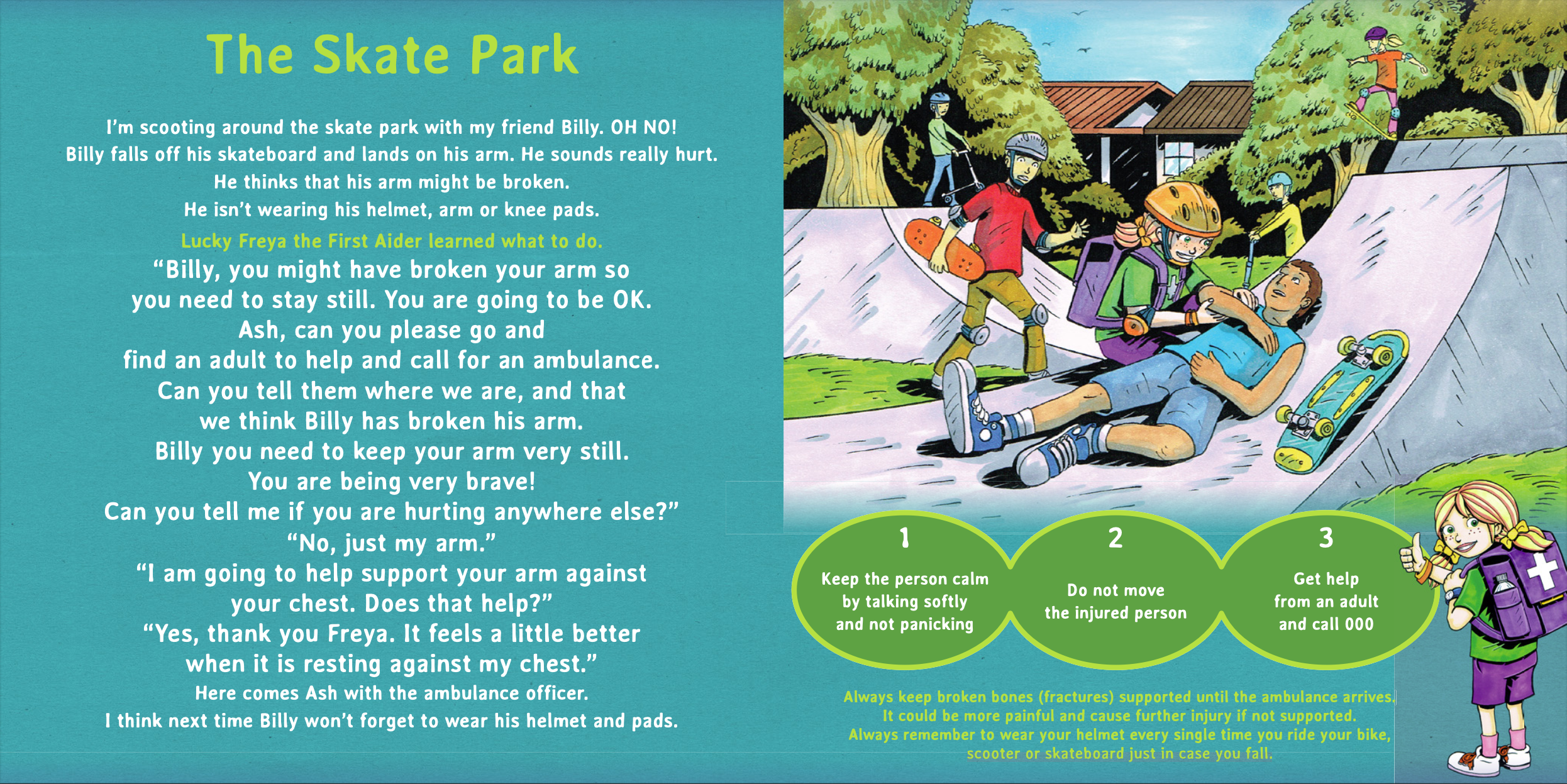
Through a quick role play, I walked my students through what to do if they see someone get hurt in PE. It all boils down to four questions:
- “Can I help you?” Ask for permission to help.
- “Where are you hurt?” Figure out the problem.
- “Are you able to move?” If the person is comfortable moving, bring them to the Medic Chair (if need be)
- “Can you get the teacher?” Ask another student to get the teacher. Stay with the hurt person to keep them calm.
Conclusion
It's very easy to dismiss this kind of learning as not being realistic for students of this age, or to say it's faster just to slap an ice pack on a kid and send them on their way. After all, we teach PE... don't we?
I want to invite you to think about friction. Not the kind that leaves the skid on your knee when you fall on the gym floor, or the kind that makes your hair reach for the balloon. I'm talking about the kind of friction that causes you to hesitate. The kind that keeps you on the fence for a moment too long. The kind that leads to you missing out.
For a lot of kids (and adults), the fear of getting hurt is the friction that prevents us from saying yes to adventures. It's what causes us to miss out on opportunities, only to later find ourselves stuck in a "what if" pool of regret.
Teaching five and six-year olds that they can handle small injuries might not directly impact their physical literacy today, but it can definitely help remove some of the friction between them and getting the most out of life tomorrow.
Being mindful of the way our teaching benefits students both today and tomorrow is an essential part of being a vision-driven physical educator. As John Dewey writes, "[...] the central problem of an education based upon experience is to select the kind of present experiences that live fruitfully and creatively in subsequent experiences." Today's Ouch Pouch might be tomorrow's getting back in the game or trying again... despite no longer having a PE teacher in your life.
I hope you've enjoyed this post and got at least one actionable idea out of it. If you're interested in following along my teaching more closely, and connecting with other passionate educators who are working towards visions that they are proud of, consider joining #PhysEdU! Memberships start at just $10/year and give you access to resources and ideas that can help infuse your teaching with a greater sense of purpose.
To learn more, visit https://www.thephysicaleducator.com/membership.
Thanks for reading! Happy Teaching!


