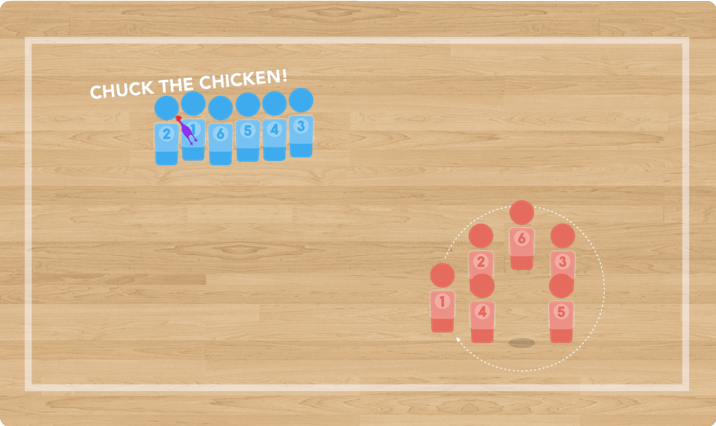
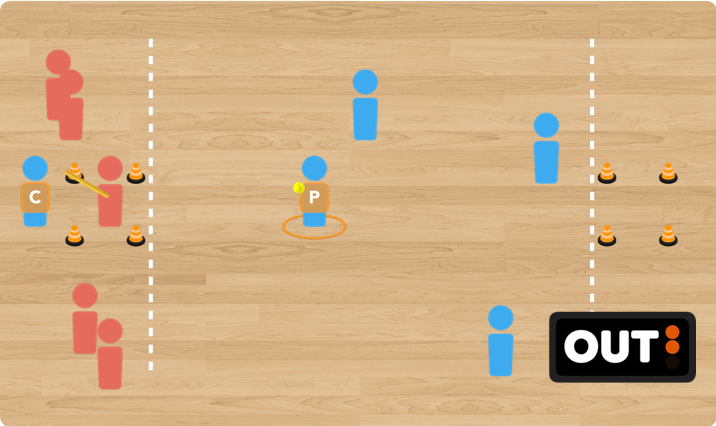
Bucketball is a striking and fielding game with no teams. The batter strikes off a tee and banks a point for every bucket they tap before the fielders get the ball to first base. Students learn to hit into open space to buy themselves the time they need.
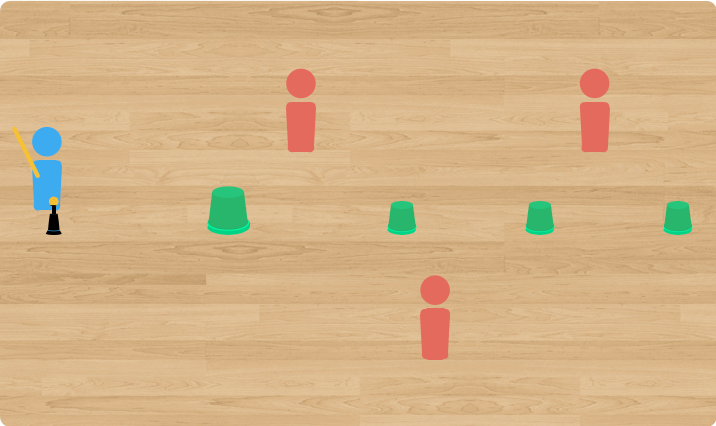
For builds 2-3, set the batting order prior to play.
This game is great for 1-3 innings, with innings lasting until each player has had an at-bat.
Dry erase boards are great for tracking banked points.
Add a handshake between the outgoing batter and the fielder who made the play that ended their turn.
Hand this to a sub and walk away. Printable pages for every build, diagrams, discussion questions, teacher notes, and assessment ideas. All in one ready-to-print package so there's no sub plan to write.
#PhysEdU Plus includes instant access to every printable game sheet in ThePhysicalEducator.com's games database. $49 a year.
Builds allow you to increase the game's complexity, one layer at a time.
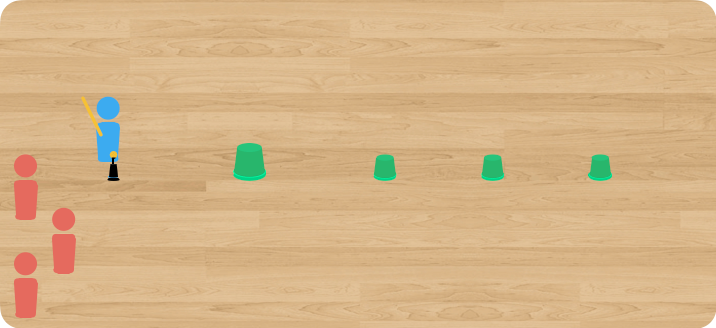
Batters take turns hitting off the tee with no fielders working against them.
Everyone else spreads out in the field and simply collects balls. The batter runs the line and taps all four buckets every time.
Rotate through several batters quickly.
This build exists to get bat safety and the tapping routine automatic before any pressure enters the game. Don't rush past it.
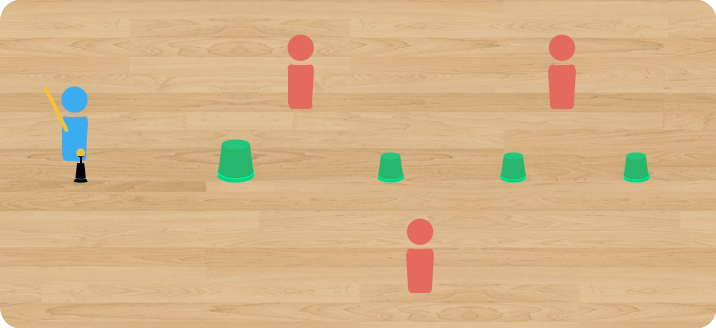
Add the fielders.
Now fielders must get the ball to hit the first base bucket to stop the batter from scoring as many points as possible (maximum four).
No strikes and no outs yet. Each batter gets three swings and then rotates.
This is where the core tension of the game shows up. Fielders will often all sprint at the ball at once. Let that happen a few times, then pause and ask what a better arrangement would look like. Let them solve it.
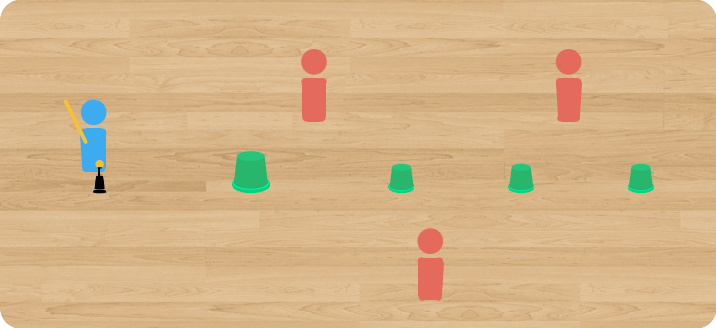
Add strikes and outs.
Swings and misses, foul balls, and balls fielded to first base before the batter gets there all count as strikes.
Add caught outs. A fielding player catching the ball out of the air automatically ends the batting player's at-bat.
Batters now stay up as long as they can last before getting out.
Print the game sheet, leave it on your desk, and your sub has everything they need: the diagrams, the builds in order, what to say, and what to watch for. This one is $4. #PhysEdU Plus members get all 39, free forever, for $49 a year.
Games that build on the same tactics.