Danish Longball is a striking and fielding game in which runners weigh the risk of breaking for home while the fielding team decides whether to chase an out or freeze the play. Students learn to read the situation and choose the best defensive play.
As required in the rules, players may not throw the bat outside of home base after a swing.
Players may not obstruct a player who is running between bases.
Soft tags should be used whenever attempting to tag a running player.
Fielding players should stand at a safe distance from the batting player.
Hand this to a sub and walk away. Printable pages for every build, diagrams, discussion questions, teacher notes, and assessment ideas. All in one ready-to-print package so there's no sub plan to write.
#PhysEdU Plus includes instant access to every printable game sheet in ThePhysicalEducator.com's games database. $49 a year.
Builds allow you to increase the game's complexity, one layer at a time.
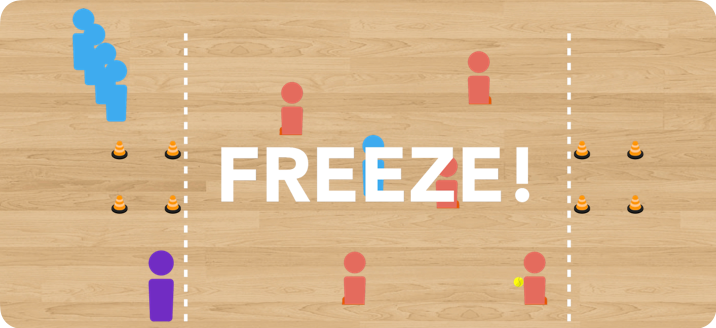
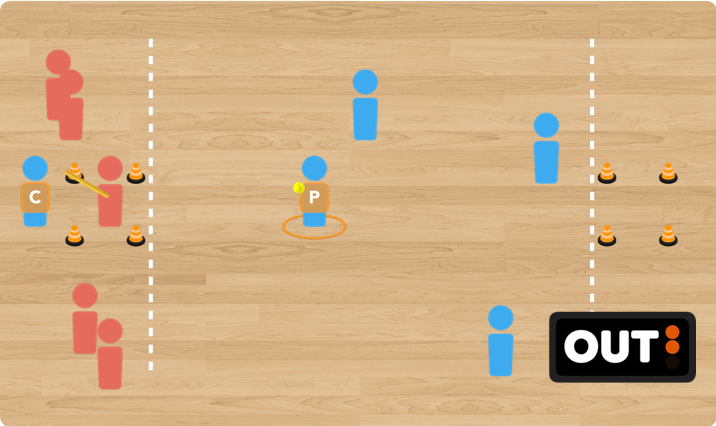
Set up the playing area with two lines 10 to 20 metres apart and place bases adjacent to each line.
Divide the class into a batting team, who line up beside home base, and a fielding team, who spread out beyond the front line with at least five steps between players.
The teacher throws a ball into the playing area. The first batting player runs to the runner base and back. As soon as they return, the next player goes. The batting team scores one point for each player who returns to home base.
To stop scoring, the fielding team must field the ball. The closest player picks it up, throws it to a teammate, and sits down. This continues until the last standing player receives the ball and calls "FREEZE".
The batting team tallies their points and teams switch roles.
This build focuses on understanding game flow without striking or complex decisions. Encourage fielding players to spread out and communicate.
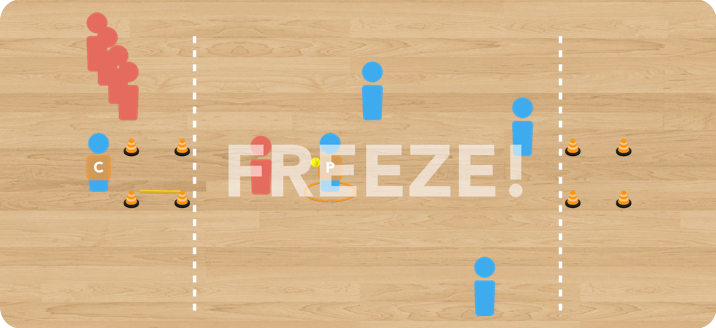
The fielding team selects a pitcher, who stands on a poly spot, and a catcher, who stands behind home base. The first batting player steps into home base with a striking implement.
The pitcher delivers an underhand pitch, within a bat's distance from the batter's belly button and between knee and shoulder height.
The batting player swings. Whether or not they strike it, they must drop the bat inside home base and run to the runner base.
The fielding team attempts to get the ball to the pitcher. Once the pitcher has the ball on the mound, they call "FREEZE" and runners must stop.
If a player reaches the runner base before "FREEZE", they may choose to run home immediately to score or wait on base. Multiple players can occupy the runner base. If "FREEZE" is called while a player is running home, they must return to the runner base. If "FREEZE" is called before reaching the runner base, the player may continue to the base but must wait one full turn before attempting to run home.
Once every batting player has batted, teams switch roles.
This build introduces risk assessment. Encourage smart decision making based on ball location and fielding player positioning.
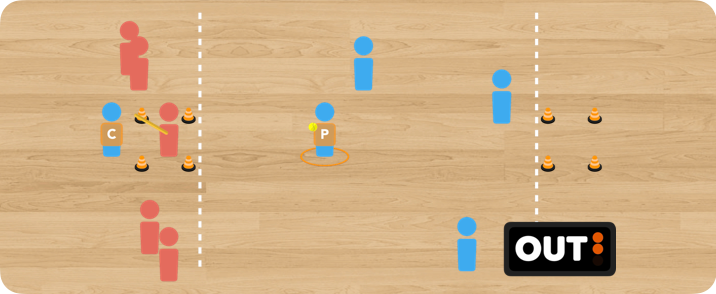
Using the same setup as Build Two, the batting player must still run whether or not they hit the pitched ball. The fielding team now has several options for getting the batting player out, which eliminates that player's ability to score during their turn.
The fielding team still has the option to throw the ball to the pitcher to freeze play. Once the pitcher has the ball and calls "FREEZE", batting players may no longer move toward the next base.
The fielding team must successfully get three players out for the teams to switch roles. This means the batting team continues batting until three outs occur, and multiple players may accumulate on the runner base waiting for safe opportunities to score.
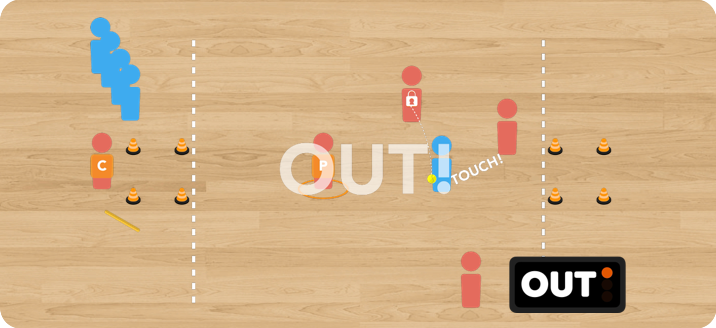
In build four, introduce a movement restriction that requires fielding players to work together through passing and positioning.
Using all the rules from Build Three, add one important constraint: fielding players may no longer run while in possession of the ball. This means that to get a batting player out, the fielding team must relay the ball to a teammate who is in position to make the play.
Fielding players also gain an additional way of getting batting team players out. If a fielding player in possession of the ball manages to hit a batting team player below the knees with the ball while that player is running between bases, the batting team player is out. However, fielding players may only use an underhand throw when attempting this type of out.
All other rules from Build Three remain in place.
This build emphasizes teamwork and positioning. Fielding players must anticipate where the ball needs to go and position themselves to receive relay throws. The below the knees rule adds another tactical option while maintaining safety.
Encourage fielding players to spread out strategically and communicate about who will cover which areas and which runners they are prioritizing.
Print the game sheet, leave it on your desk, and your sub has everything they need: the diagrams, the builds in order, what to say, and what to watch for. This one is $4. #PhysEdU Plus members get all 39, free forever, for $49 a year.
Games that build on the same tactics.