Chasing & Fleeing

Key Tag

Unlock some fun with Key Tag! In Key Tag, students learn about player roles as they compete to lock and unlock their classmates in a fast-paced, action-packed chasing and fleeing game!
Learning Targets

I can identify different roles within a game.
I know what game roles are.
I understand that different roles have different responsibilities within a game.

Game Overview

Play Area
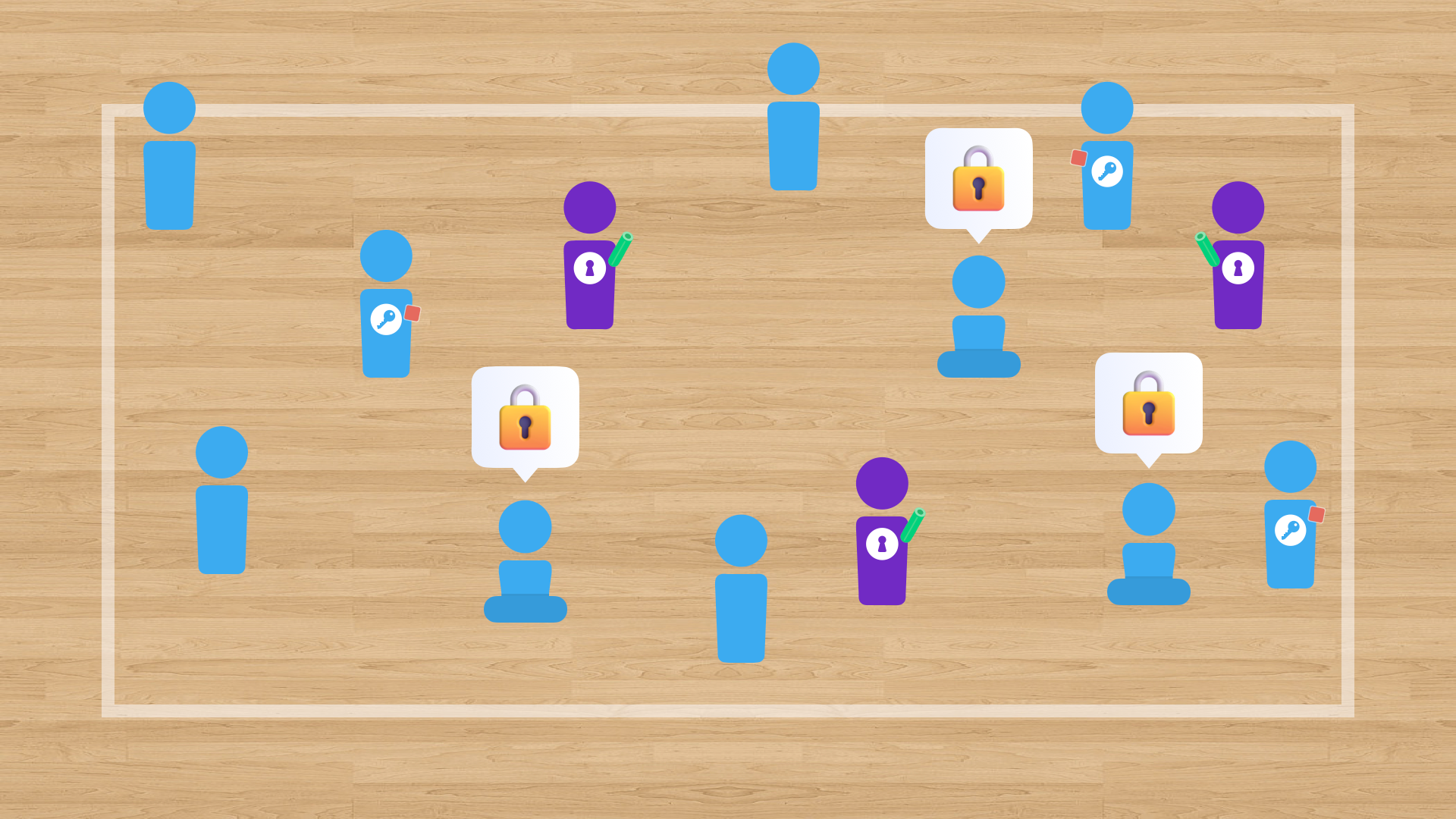
  • The teacher sets up a rectangular playing area. Students begin the game in a scattered formation within it.
Goal
  • The fleeing players try to avoid being tagged by the Locks. The chasing players try to tag the fleeing players.
Play
  • The teacher selects three or four players to be Locks and gives each one a foamie to tag with. All other players are Runners, except for three or four who start as Keys and each carry a beanbag.
  • Locks tag fleeing players with their foamie. A tagged Runner sits cross-legged and forms a lock shape by raising their arms in a circle above their head.
  • Keys unfreeze frozen players by gently placing their beanbag on top of the frozen player's head.
  • Once unfrozen, that player becomes the new Key. The original Key gives up their beanbag and returns to being a fleeing player.
  • Players carrying a beanbag cannot be tagged, but only while the beanbag is in their possession.

Equipment

  • Foamies (short pool noodles)
  • Beanbags
  • Hula Hoops
  • Dice
  • Cones

Safety

  • Tag safely with noodles: Remind Locks to tag below the shoulders using gentle, controlled swings of the noodle—no swinging near the face or winding up for power.
  • Stay aware while moving: Players should keep their heads up and be aware of others to avoid collisions while fleeing, chasing, or unlocking.
  • Clear signals for frozen players: Encourage students to use clear, consistent body signals (e.g., lock shape or moose antlers) and stay in place when frozen to reduce confusion and running into seated players.

Printable Game Sheet

Hand this to a sub and walk away. Printable pages for every build, diagrams,  discussion questions, teacher notes, and assessment ideas. All in one ready-to-print package so there's no sub plan to write.

$4
USD · instant download
Add to cart
OR NEVER PAY FOR ONE AGAIN

#PhysEdU Plus includes instant access to every printable game sheet in ThePhysicalEducator.com's games database. $49 a year.

See what's in Plus

Game Builds

Builds allow you to increase the game's complexity, one layer at a time.
1
Build
1

Locks

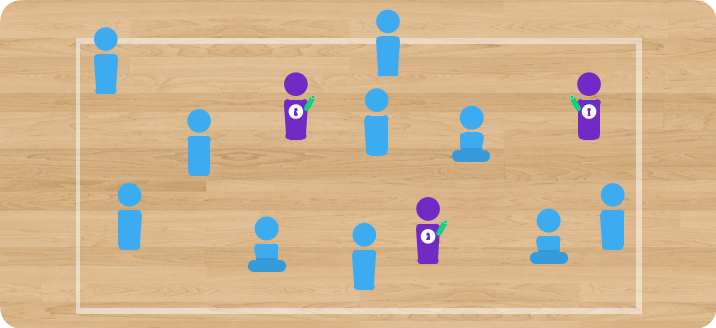
Players begin in a scattered formation within a defined playing area.

The teacher selects 3–4 players to act as Locks, each equipped with a pool noodle (foamie). The Locks chase and attempt to tag fleeing players.

If tagged, players sit cross-legged and remain frozen for the rest of the round.
Discussion Questions

  • What are roles in games?
  • Which roles can you find in this game?
2
Build
2

Keys

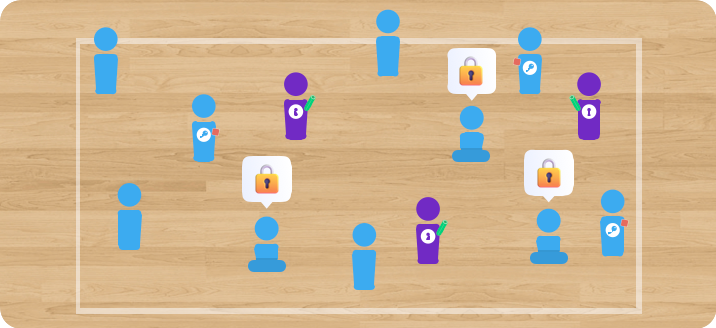
This build introduces the Keys.

Tagged players sit cross-legged and form a “lock shape” with their arms over their head.

3–4 players start as Keys, each carrying a beanbag. Keys unfreeze frozen players by placing the beanbag on their head. The unfrozen player becomes the new Key, while the original Key returns to fleeing without protection.

Keys cannot be tagged while holding the beanbag.
Discussion Questions

  • How does the new role change this game?
  • Which roles in this game are chasing roles? Which roles are fleeing roles?
  • Why does this game need different roles?

Assessment Ideas

  • Teacher Observation can be used to assess students’ ability to identify roles within a game.
  • Group Discussion can be used to assess students’ knowledge of game roles.
3
Build
3

Locksmiths

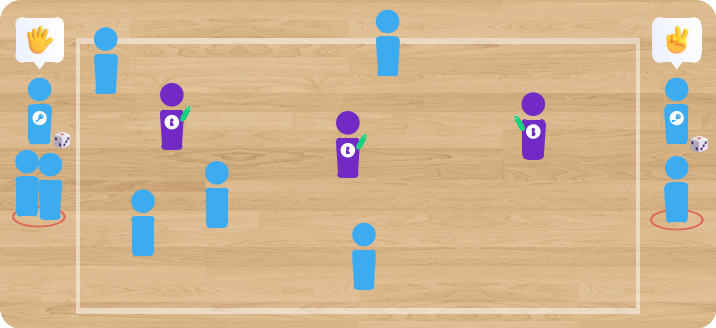
In this build, the Key role is removed. Instead, 2–3 players become Locksmiths, each stationed outside the play area with a hula hoop and die.

To start the build, each Locksmith rolls their die and holds up that number of fingers (1–6) to show their current “unlock code.”

When tagged, players signal this by showing a moose antler (i.e. an open hand with their thumb against their temple) and head to a Locksmith’s hoop.

Once the number of frozen players in the hoop matches the Locksmith’s displayed number, everyone in the hoop is freed and rejoins the game. The Locksmith then rolls again to set a new unlock number.

Discussion Questions

  • How does the Locksmith role affect this game?
  • What could be other chasing roles we could add to this game?
  • What could be other fleeing roles we could add to this game?

Assessment Ideas

  • Think-Pair-Share can be used to assess students’ understanding of player roles within games.

Away on Thursday?

Print the game sheet, leave it on your desk, and your sub has everything they need: the diagrams, the builds in order, what to say, and what to watch for. This one is $4. #PhysEdU Plus members get all 39, free forever, for $49 a year.

More
Chasing & Fleeing
Games

Games that build on the same tactics.